MIAMI 94
World Building Case Study
BUILDING UNIQUE WORLDS THROUGH ART DIRECTION & AI
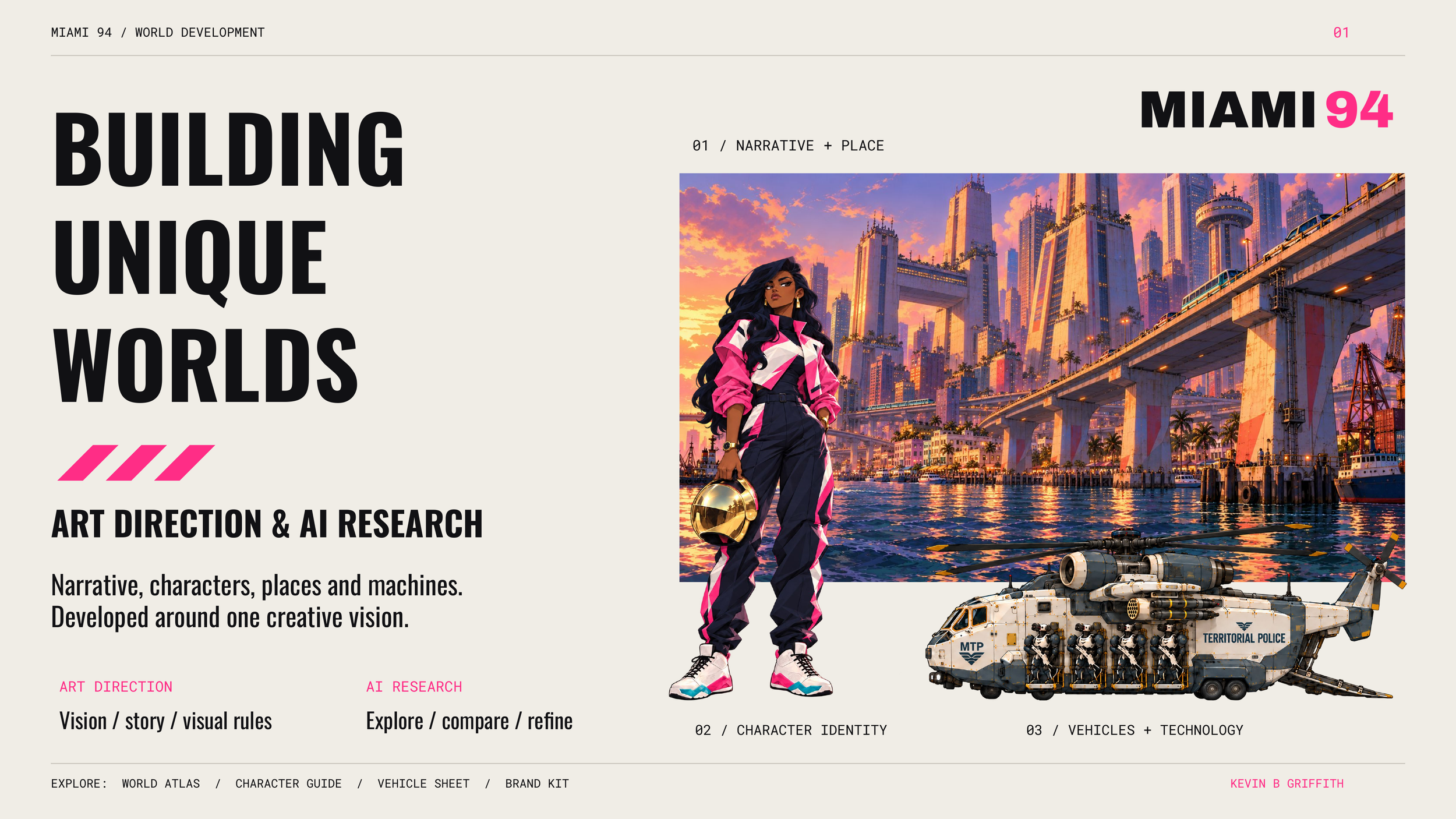
My research explores how art direction and AI can work together to develop original worlds with a clear identity. Through - Miami 94 - I’m connecting narrative, characters, architecture, vehicles and branding around a shared creative vision.
I define the world’s foundations, establish its visual language and guide its development through research, experimentation and critique. AI supports that process by helping me explore possibilities and test how well the direction holds together across different subjects, scenes and formats.
“Create a Rich, Original World that has Thematic & Visual Consistency at scale.”
Why I Created Miami 94
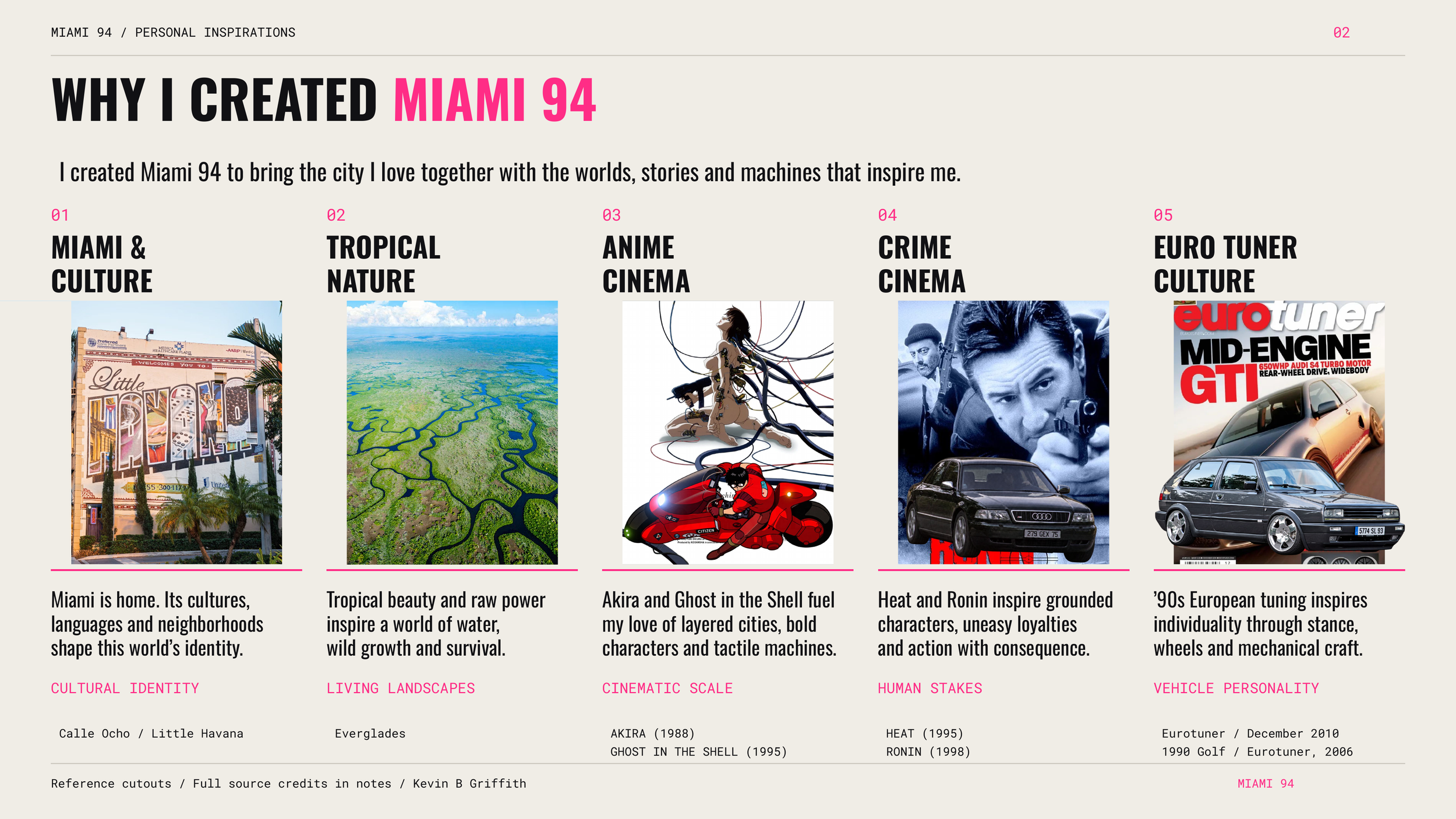
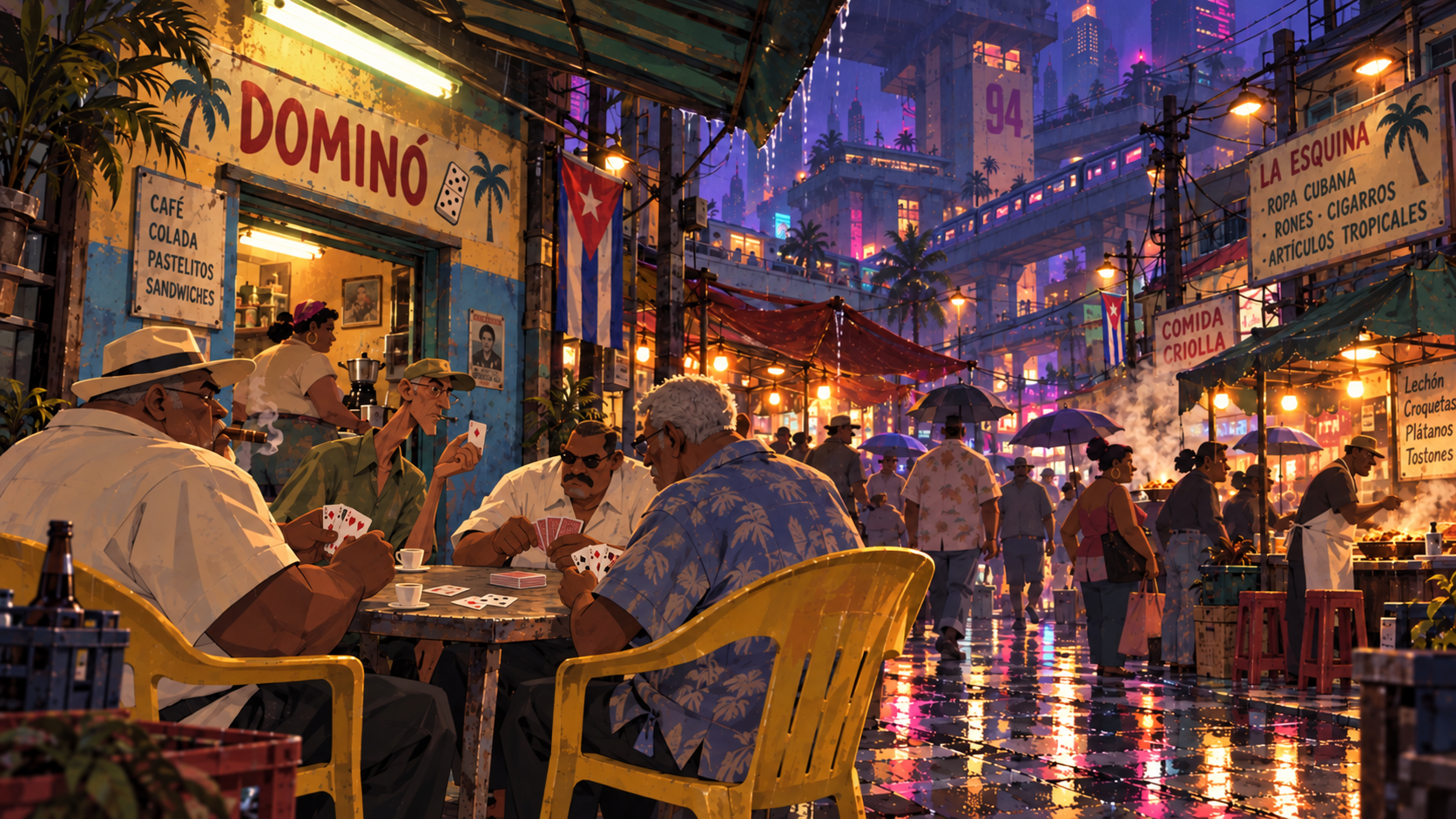
Miami 94 brings together my love for my home city and the films, animation and car culture that inspire me. Miami’s multicultural fabric gives the world its human identity: different languages, histories and communities shaping the character of its neighborhoods. Its proximity to the Everglades, tropical vegetation and open water is equally important. That relationship between urban life and powerful, exotic nature became a starting point for imagining a city transformed by flooding, adaptation and survival.
Akira and Ghost in the Shell inform my love of layered cities, expressive characters and machines that feel physical and lived in. Their influence sits alongside the grounded tension of Heat and Ronin: people navigating conflicting loyalties, dangerous relationships and actions with lasting consequences. Together, these inspirations help shape both the visual scale of Miami 94 and the personal stories unfolding within it.
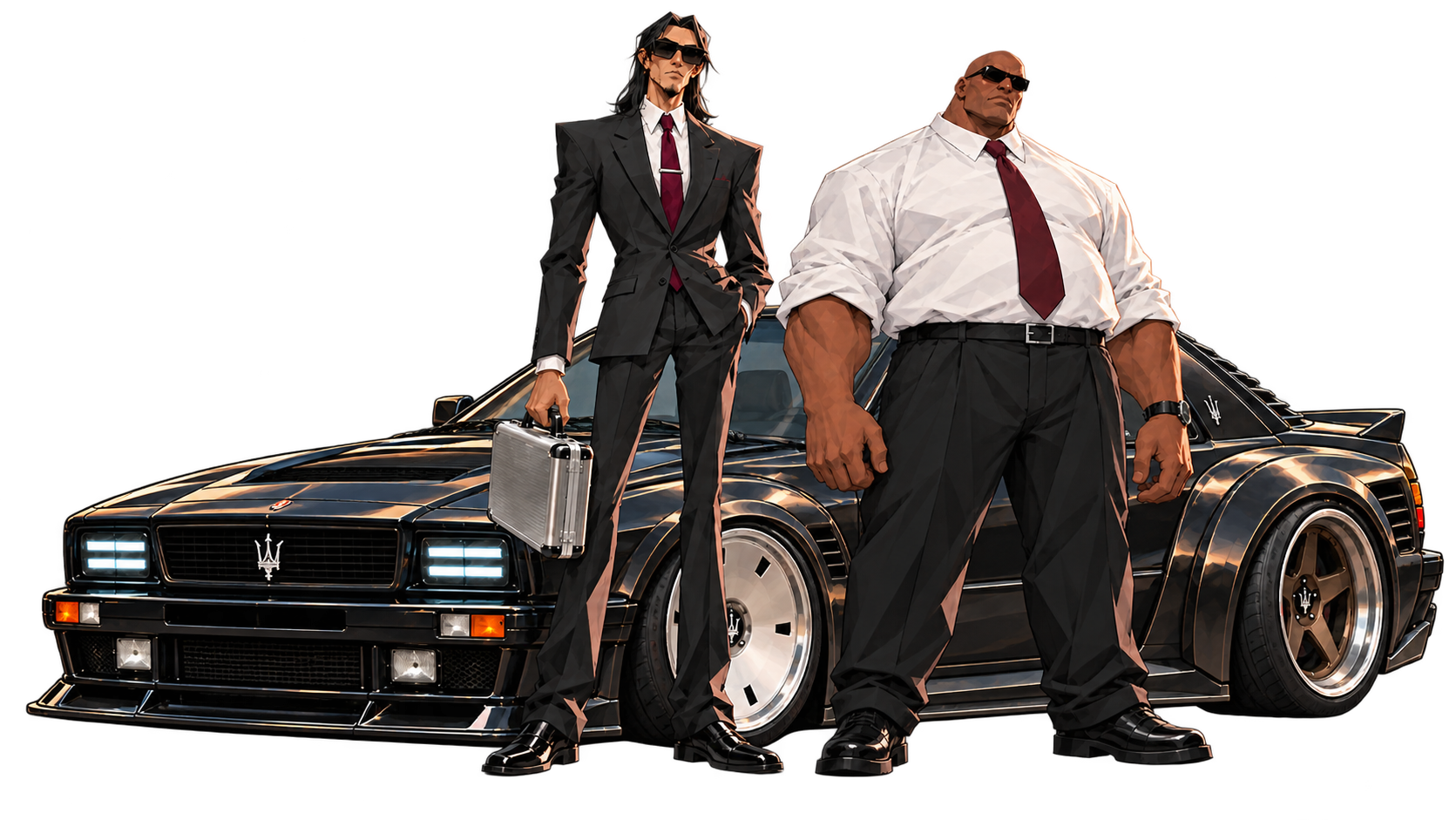
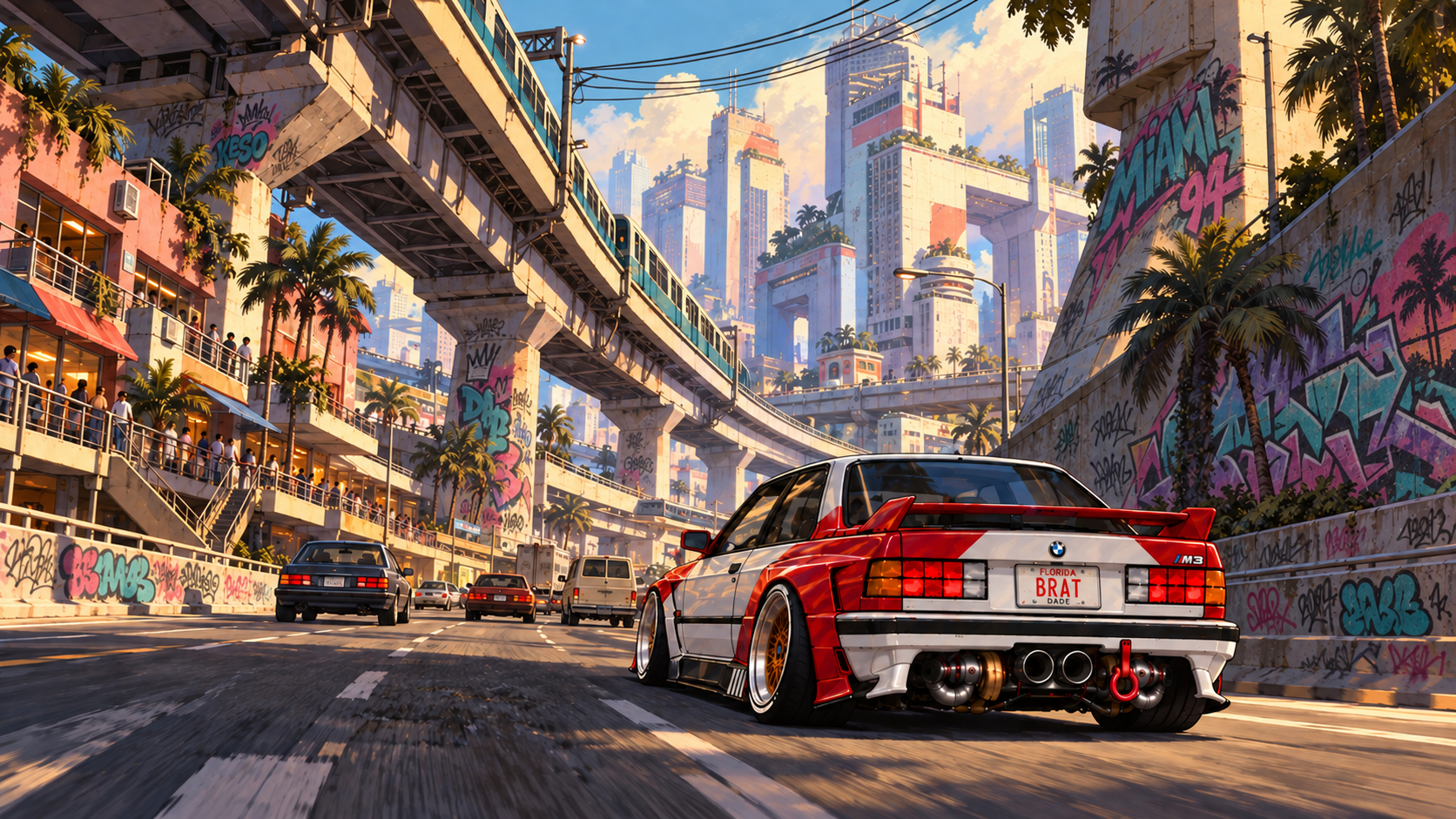
My love of ’90s European tuner culture adds another layer. The stance of a car, its wheels, modifications and signs of wear can reveal its owner’s taste, ambitions and circumstances. Vehicles become part of character design, carrying personality and history into the streets.
These influences form the foundation of my art direction. They guide decisions across characters, environments, vehicles and storytelling, and give purpose to my research with AI. Building Miami 94 is an opportunity to explore how personal references can evolve into a distinctive world, with its own visual language and stories to tell.
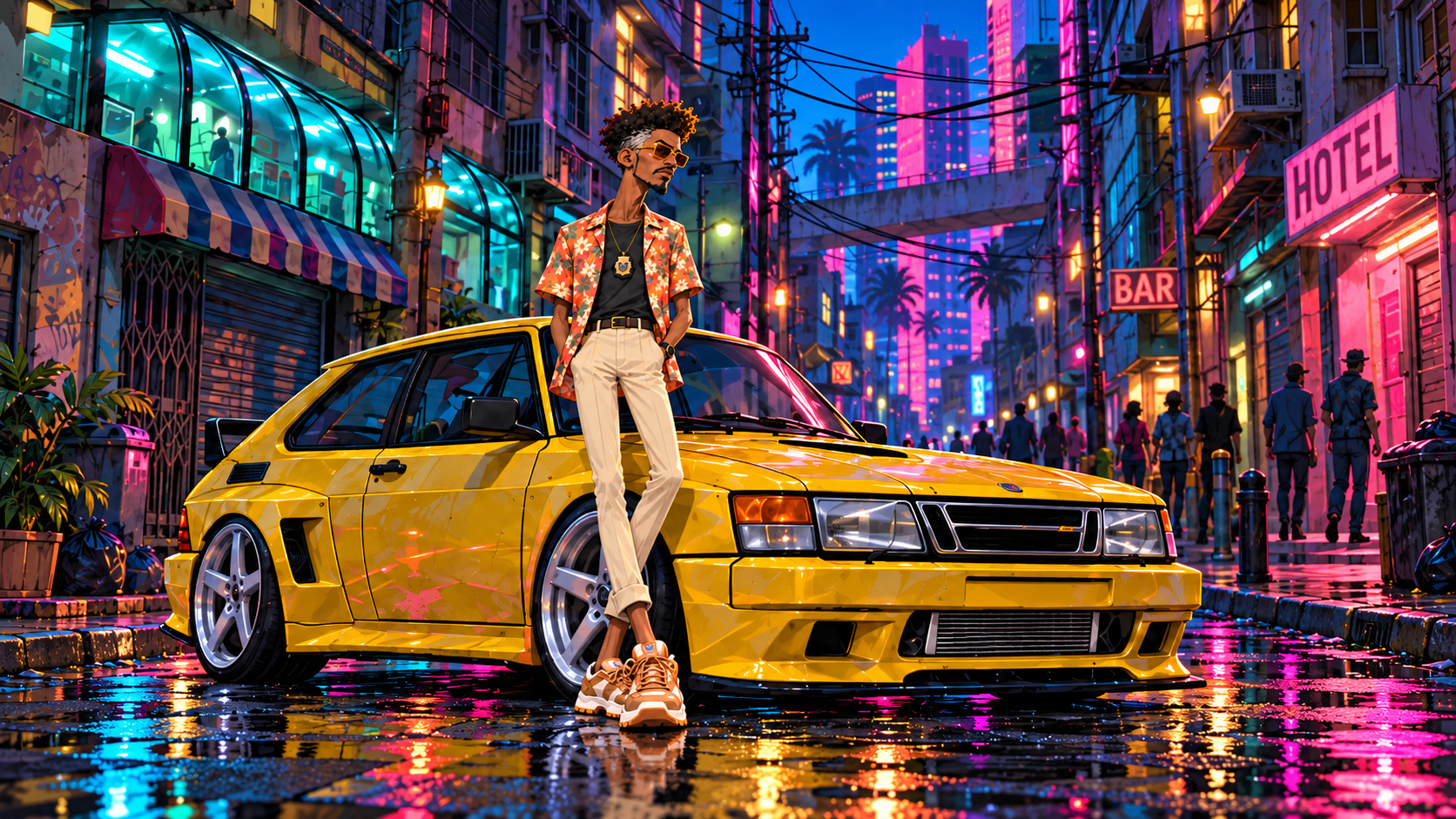
THE WORLD
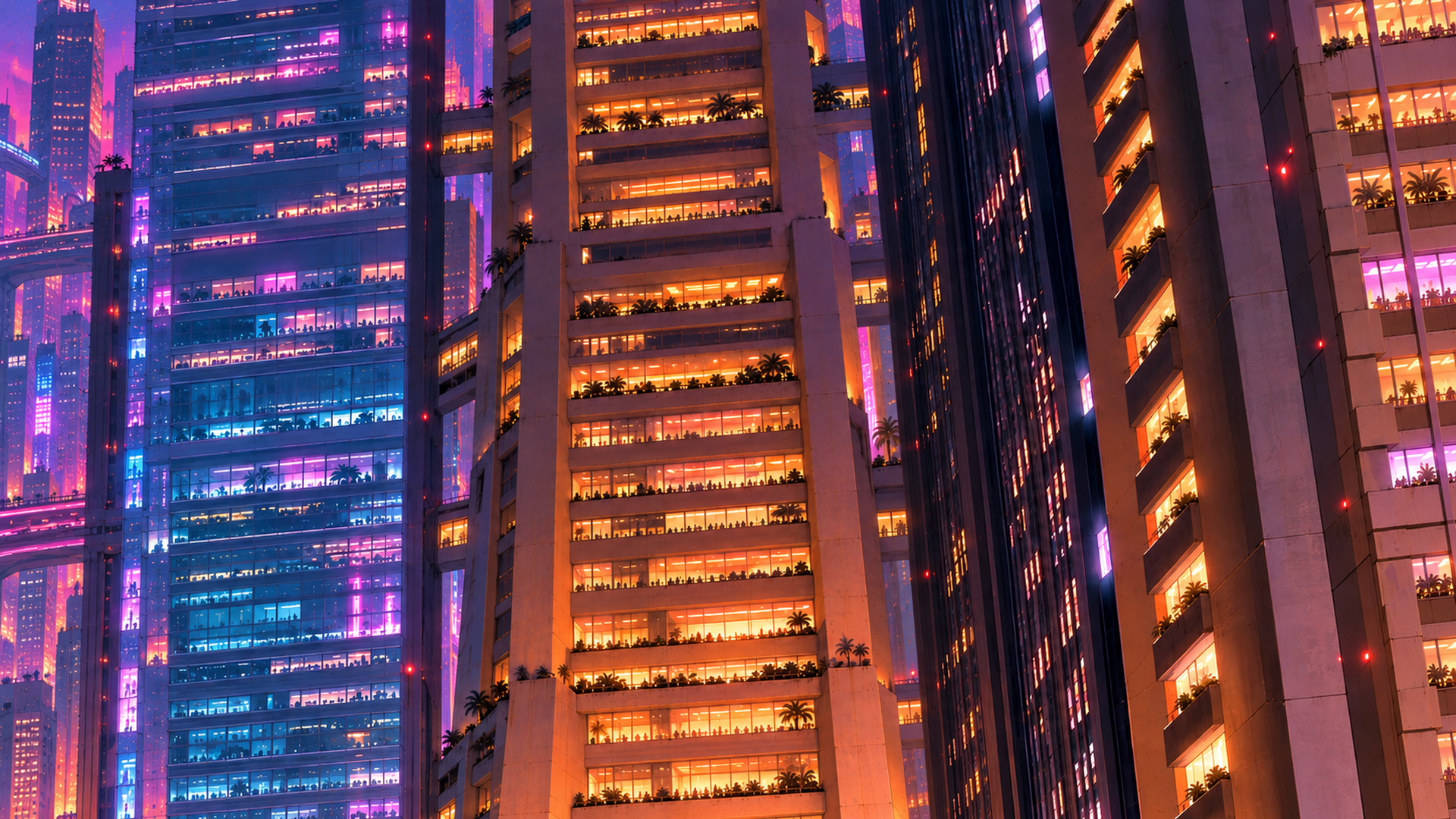
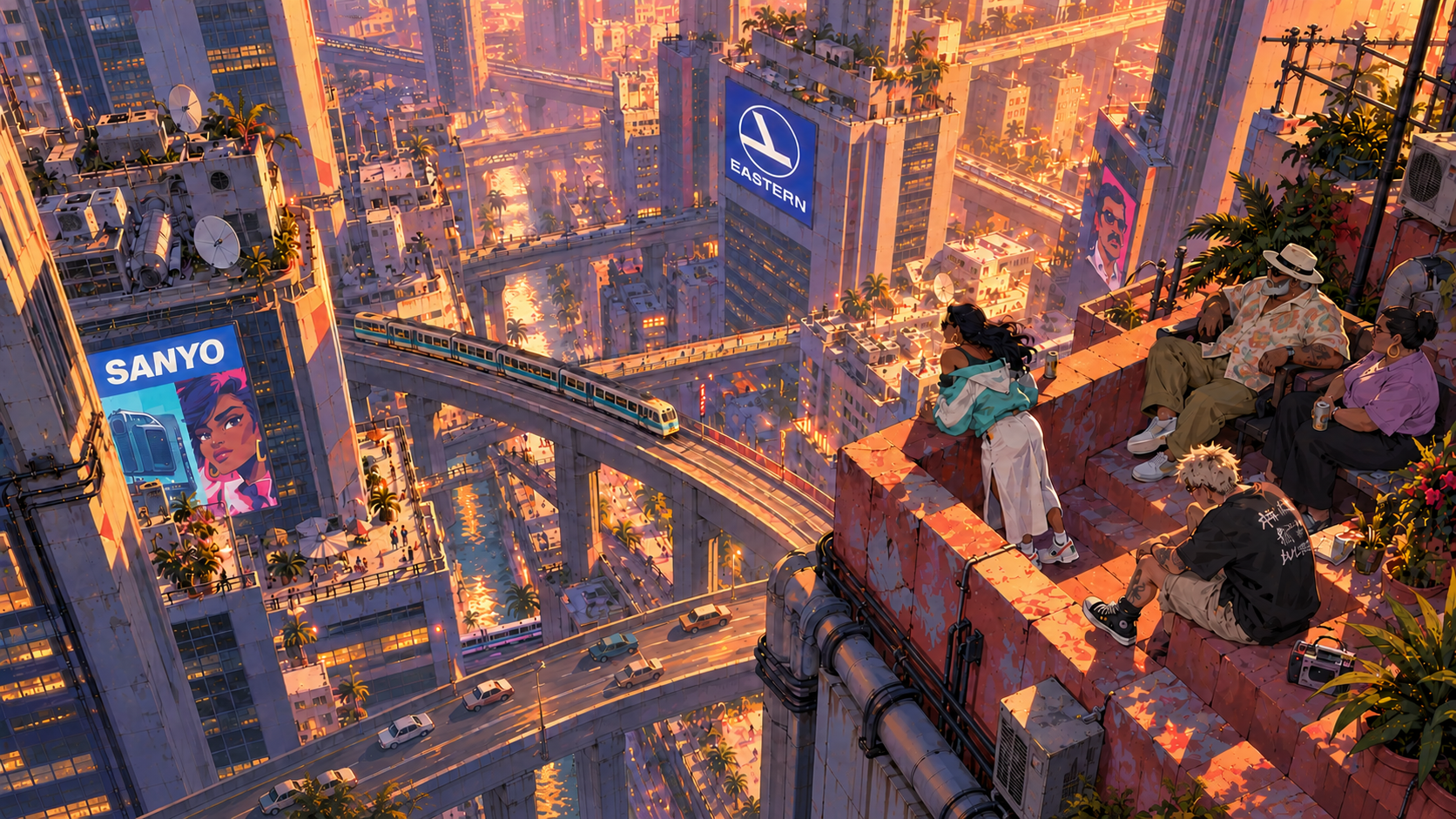
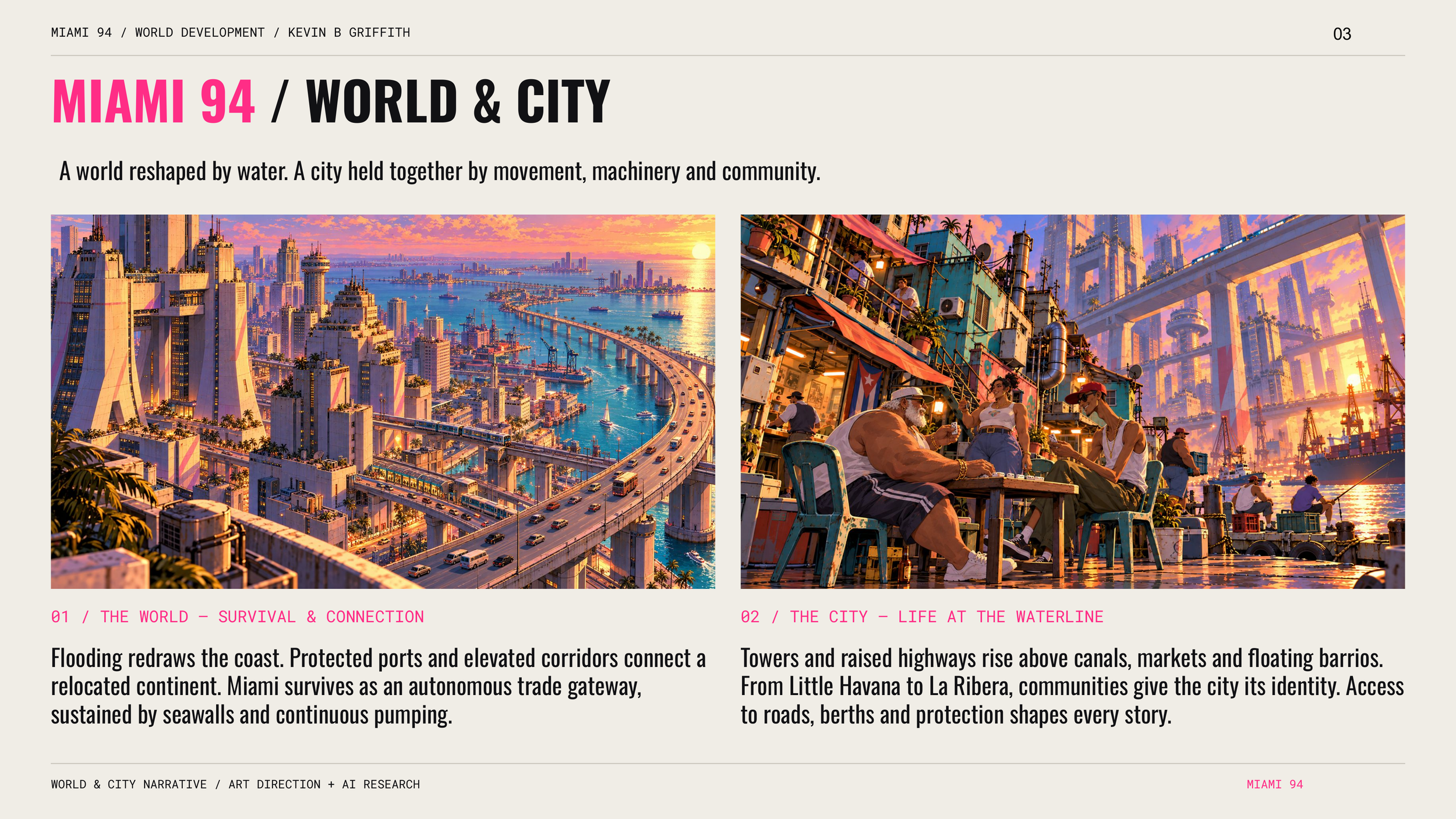
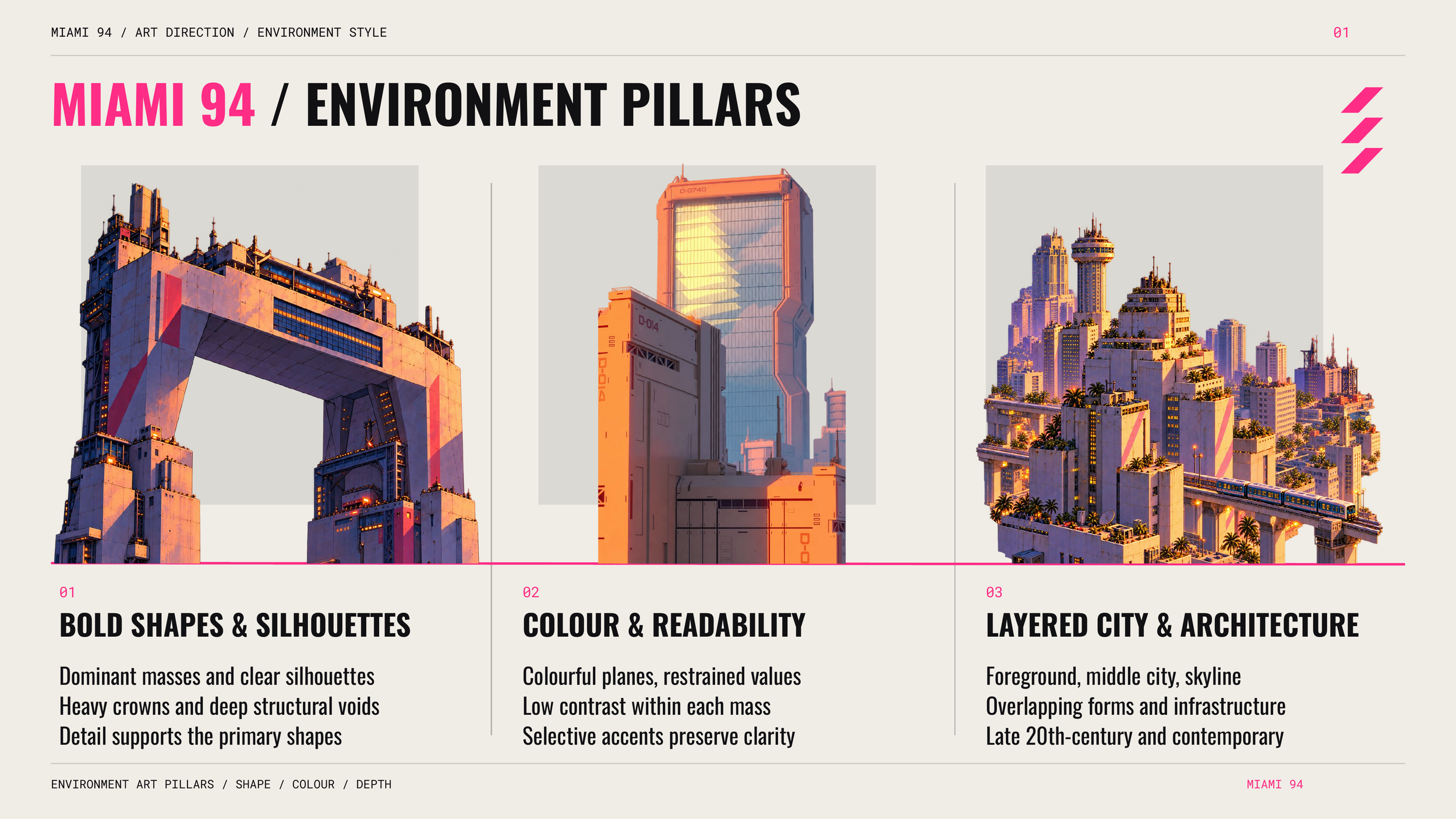
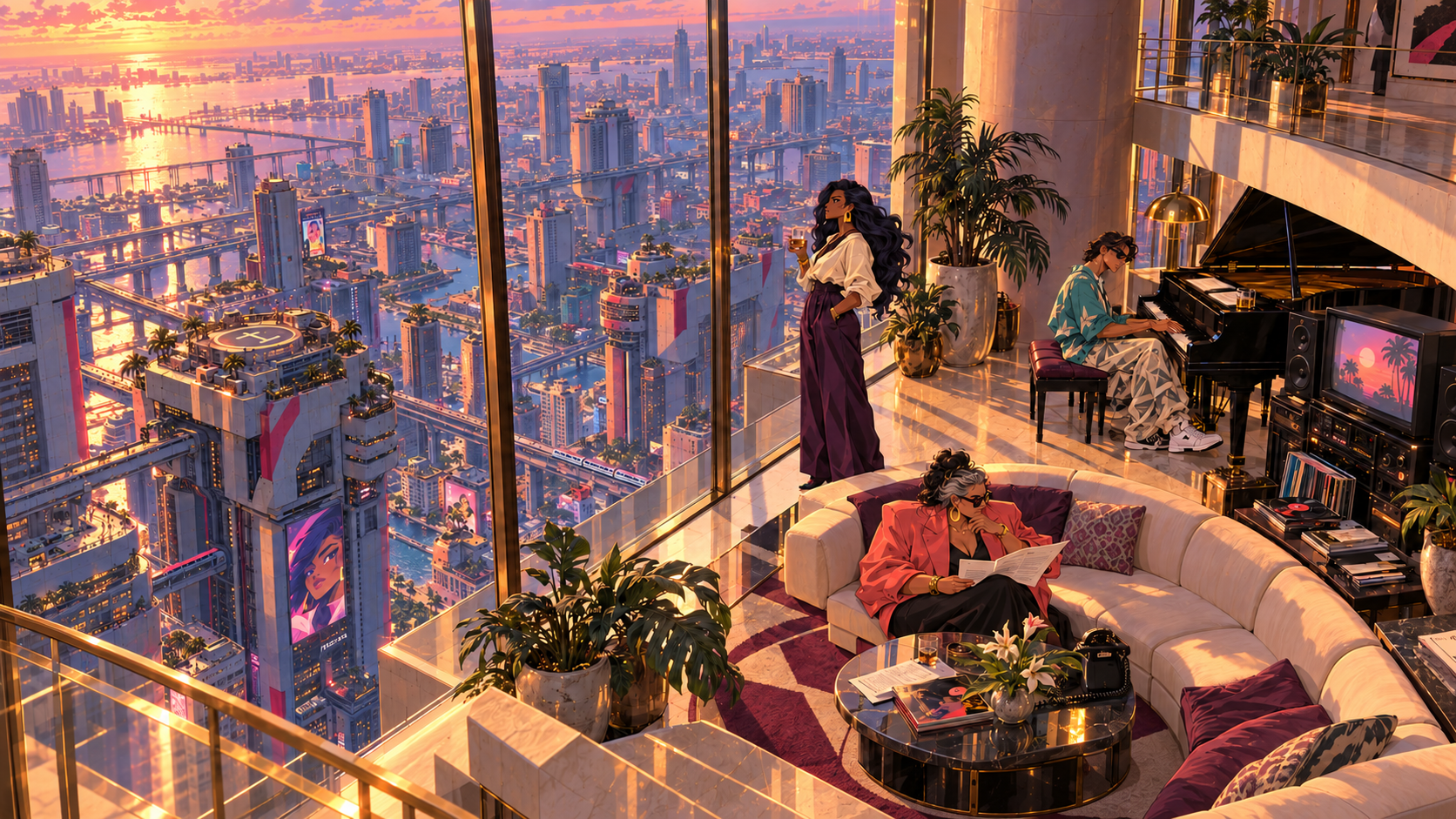
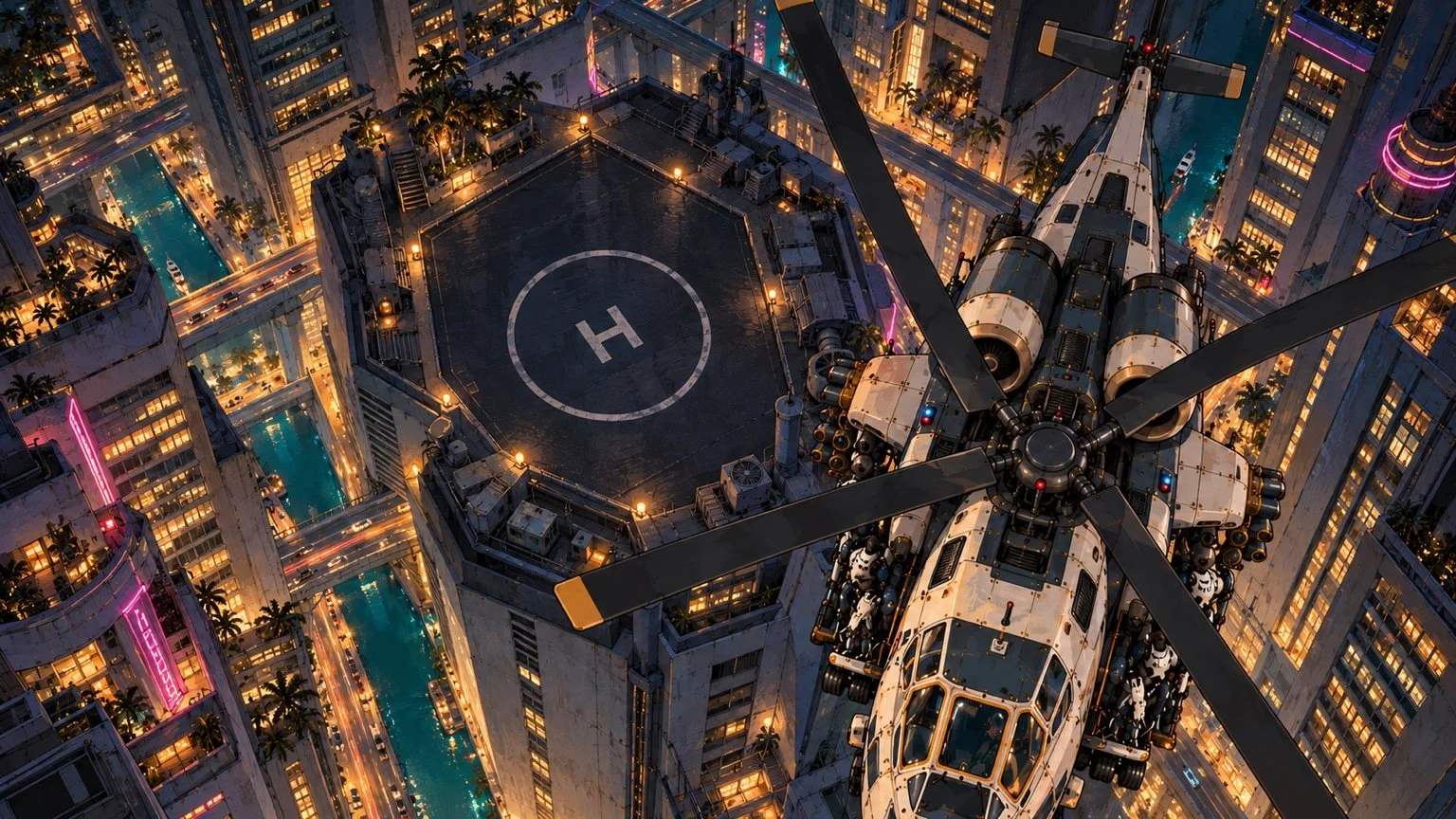
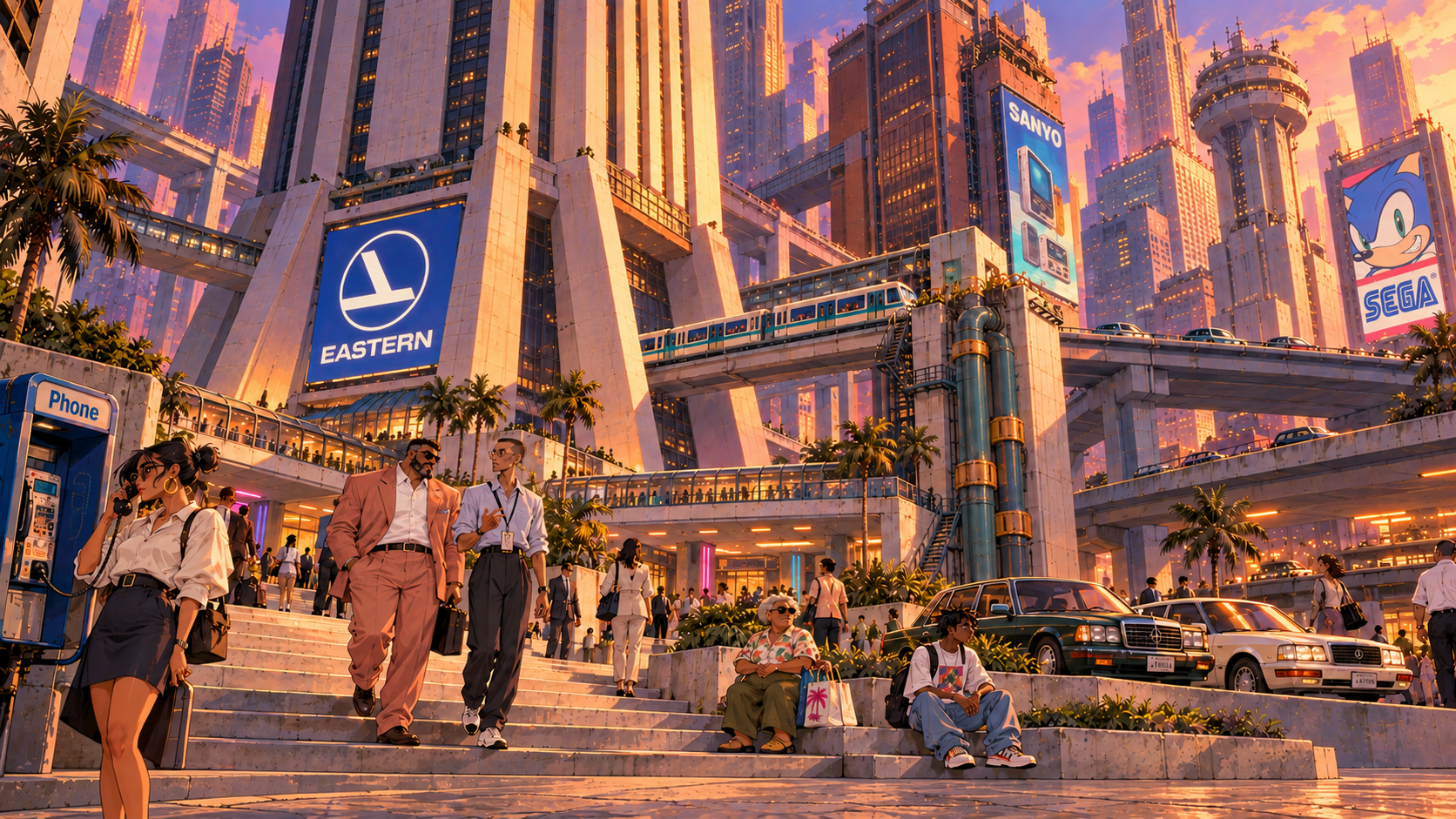
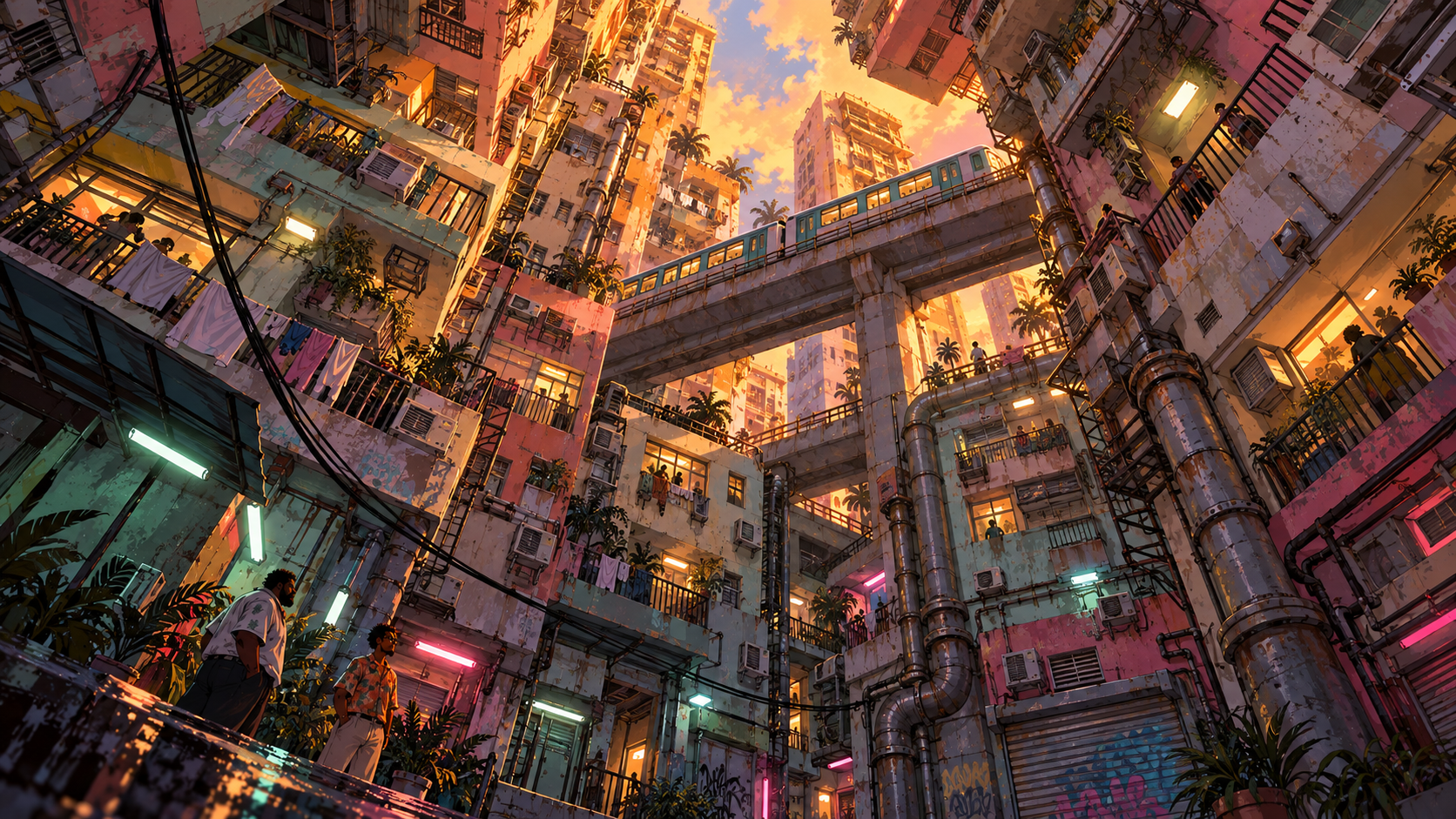
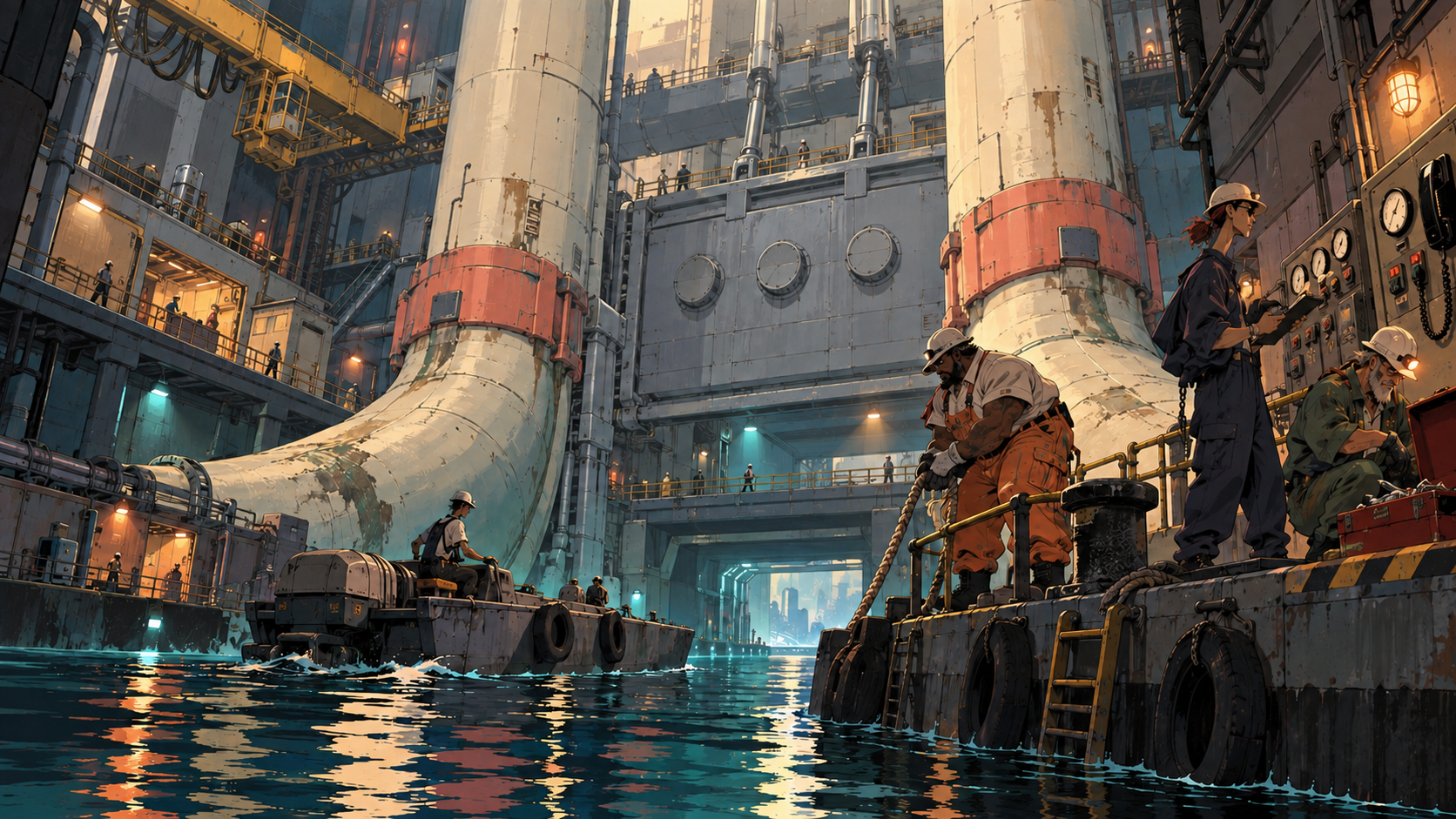
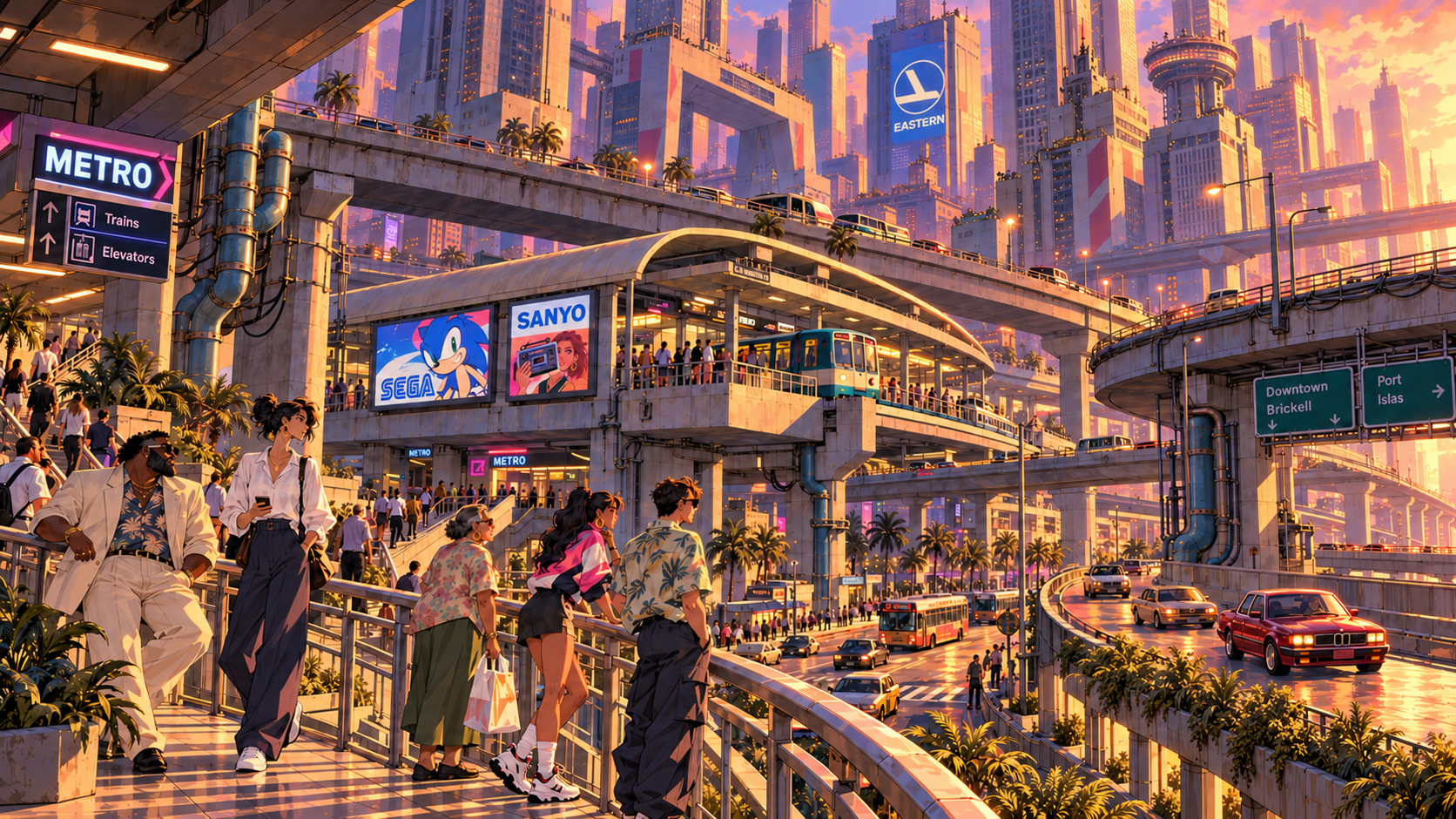
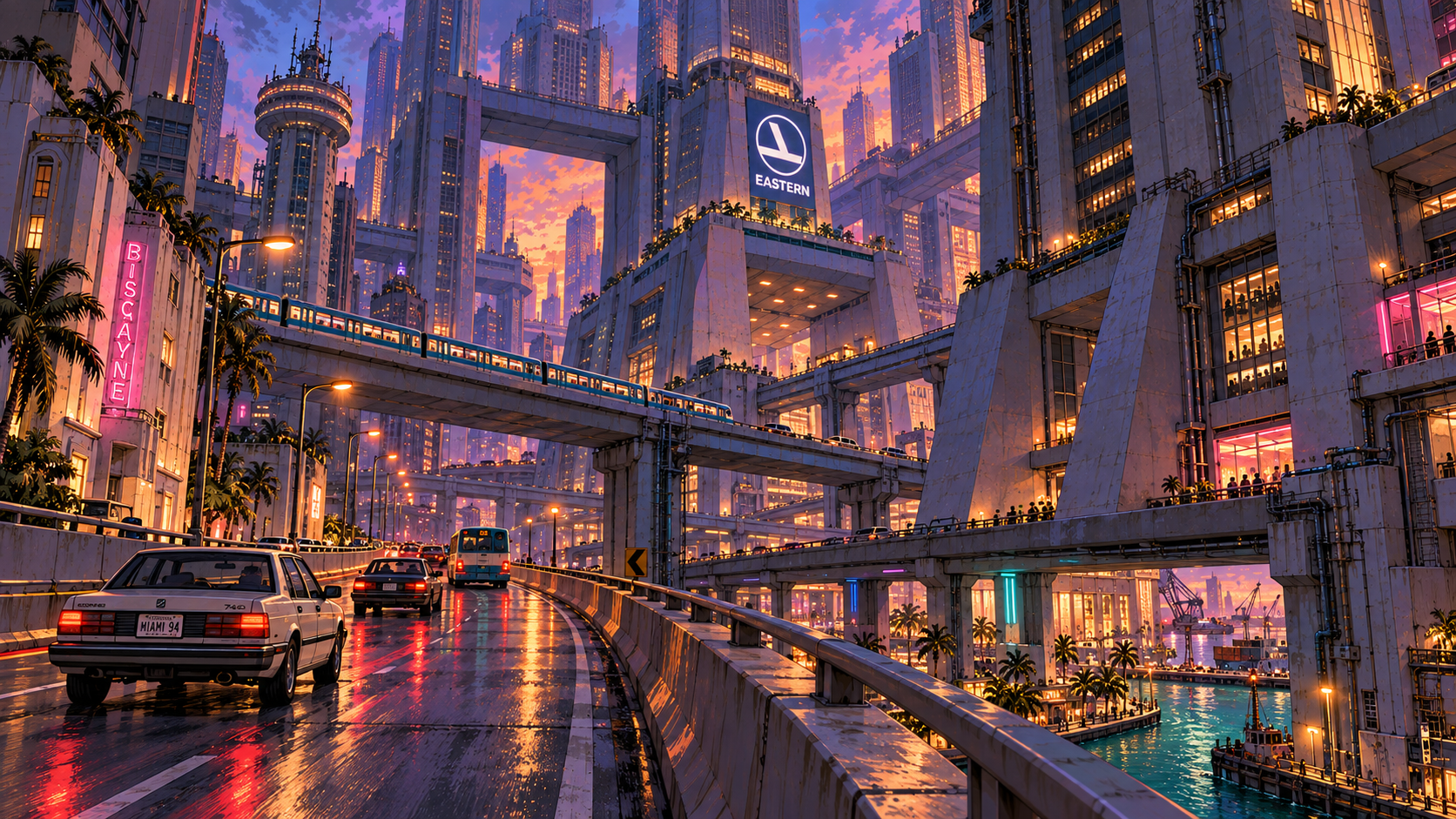
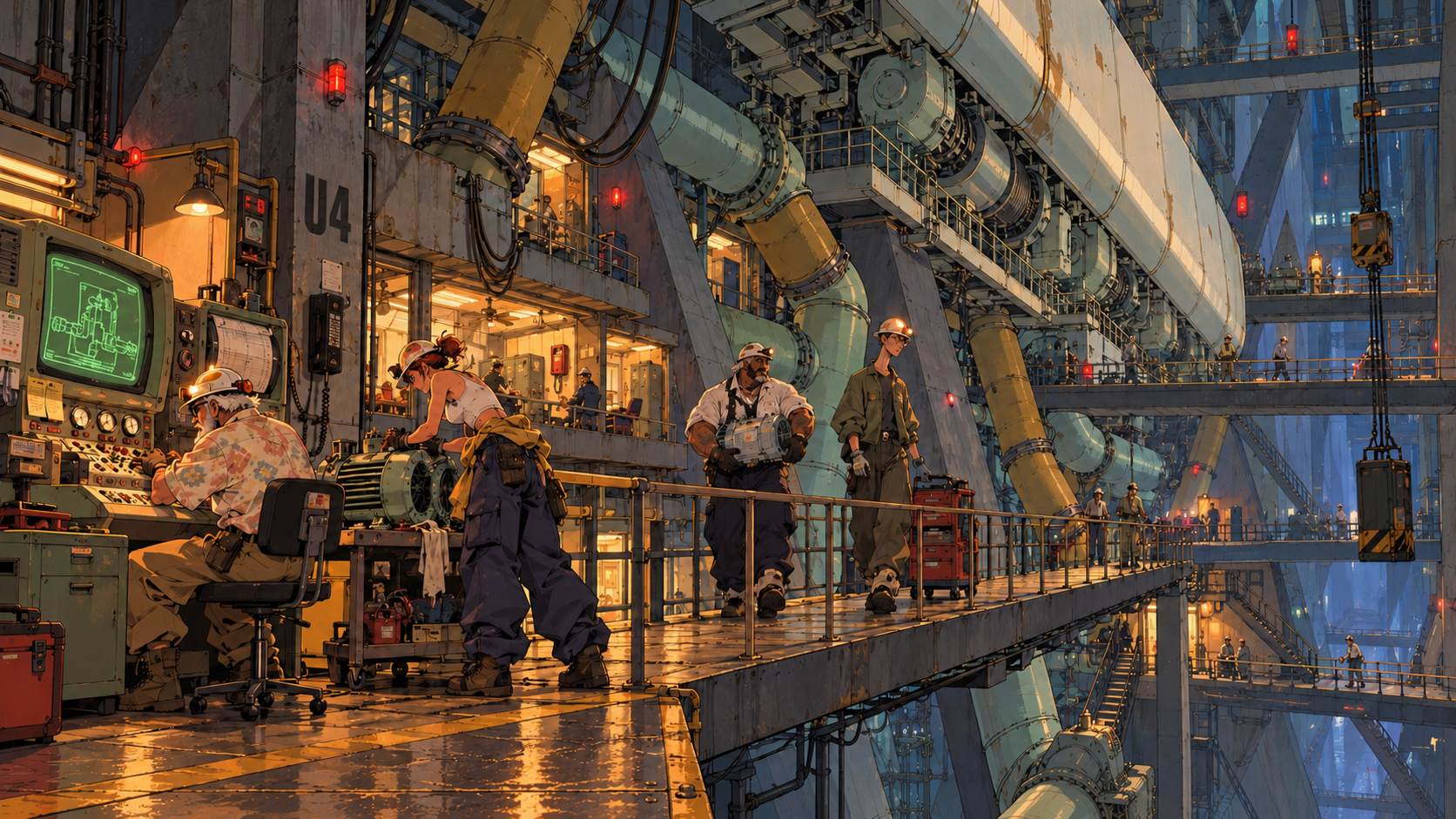
I wanted Miami 94 to feel like a place with a history—a city whose architecture, infrastructure, and daily life reveal how it came to exist. Flooding reshapes the geography. Geography changes how people move. Access to transport, protected ground, and working machinery determines who can thrive.
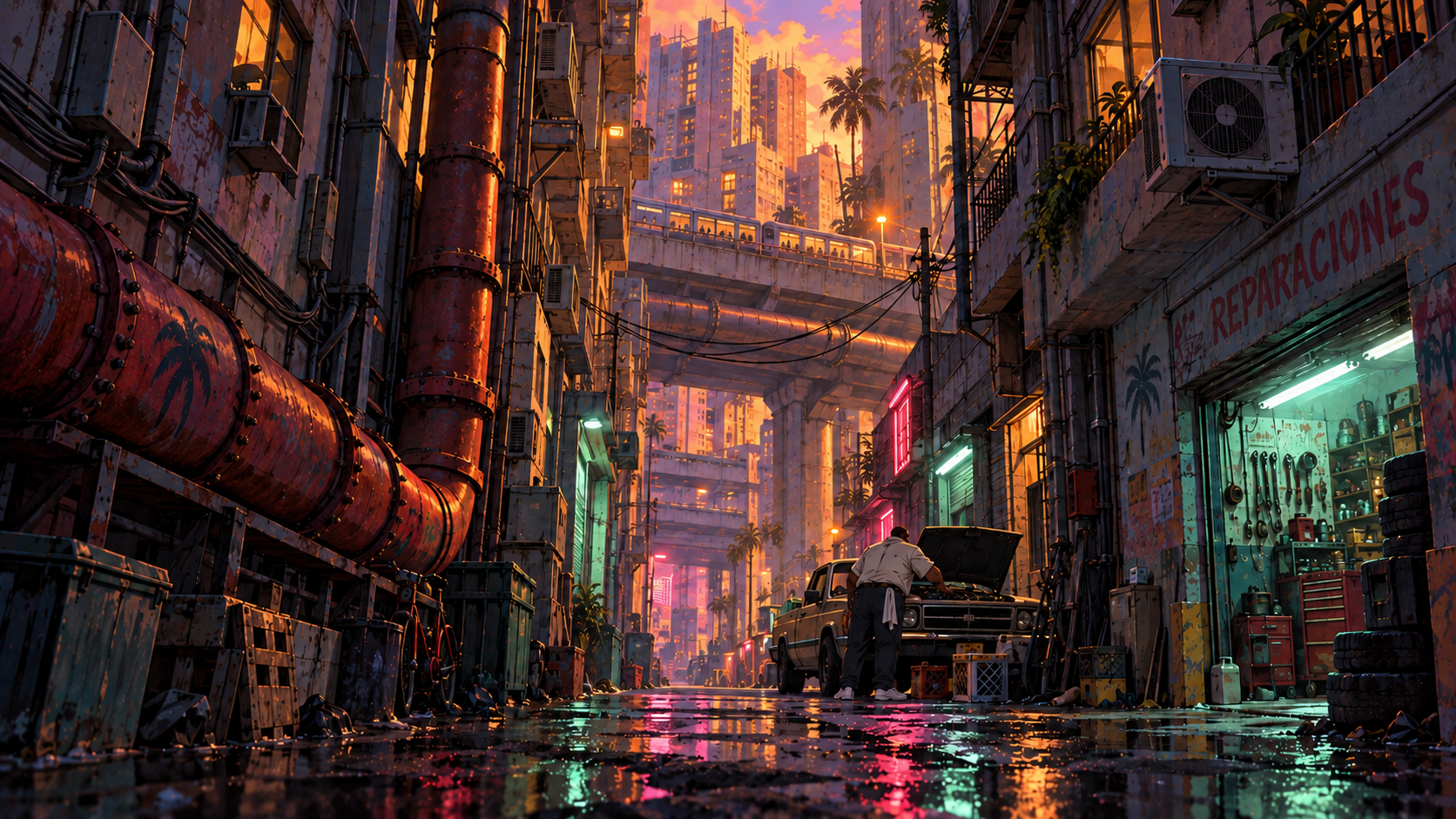
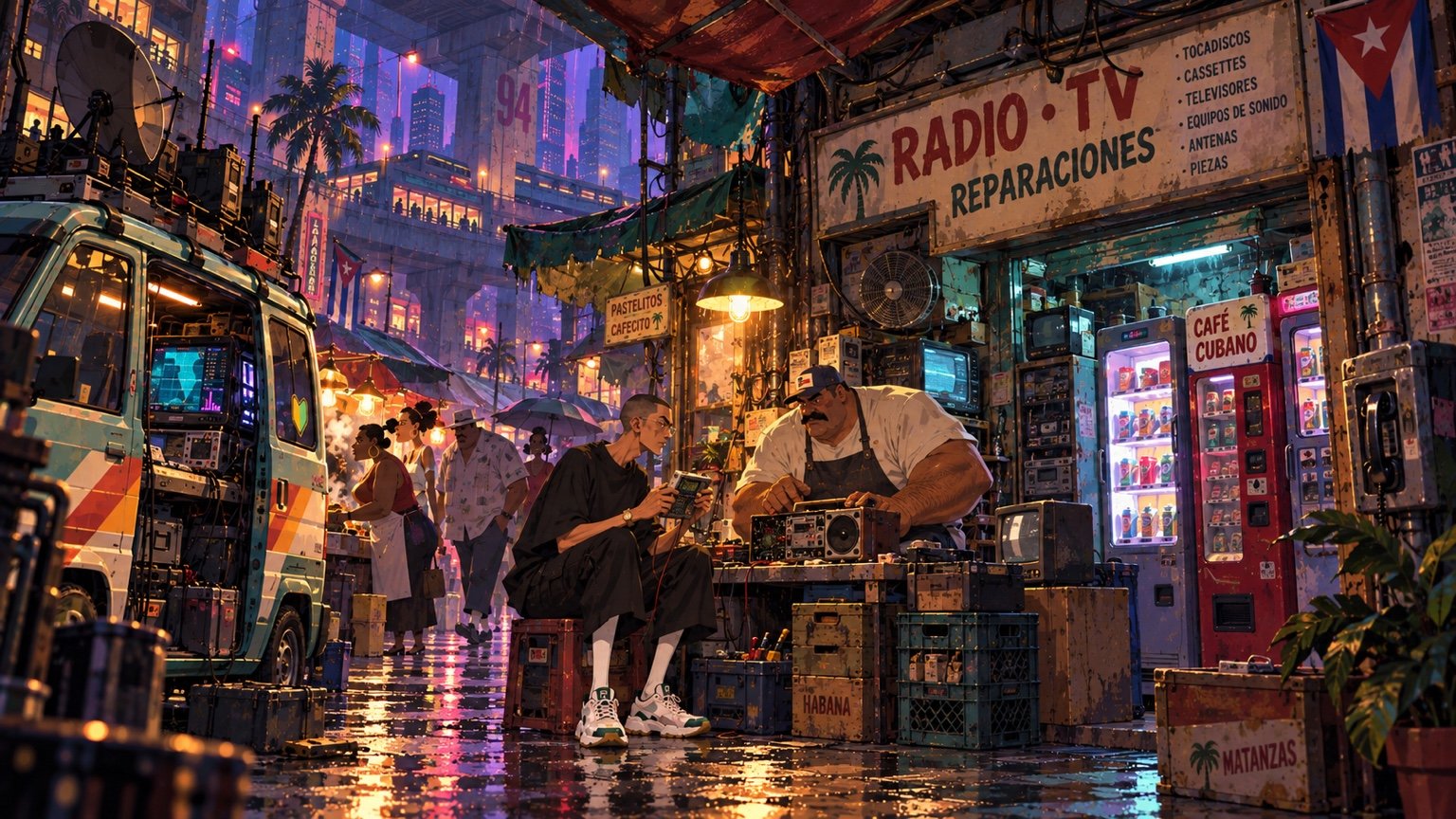
That relationship guides my world building. Through art direction and AI research, I explore the setting from the scale of the coastline down to a neighborhood workshop. Each image needs to tell us something about the city, its people, and the forces shaping their lives.
The Coast We Kept
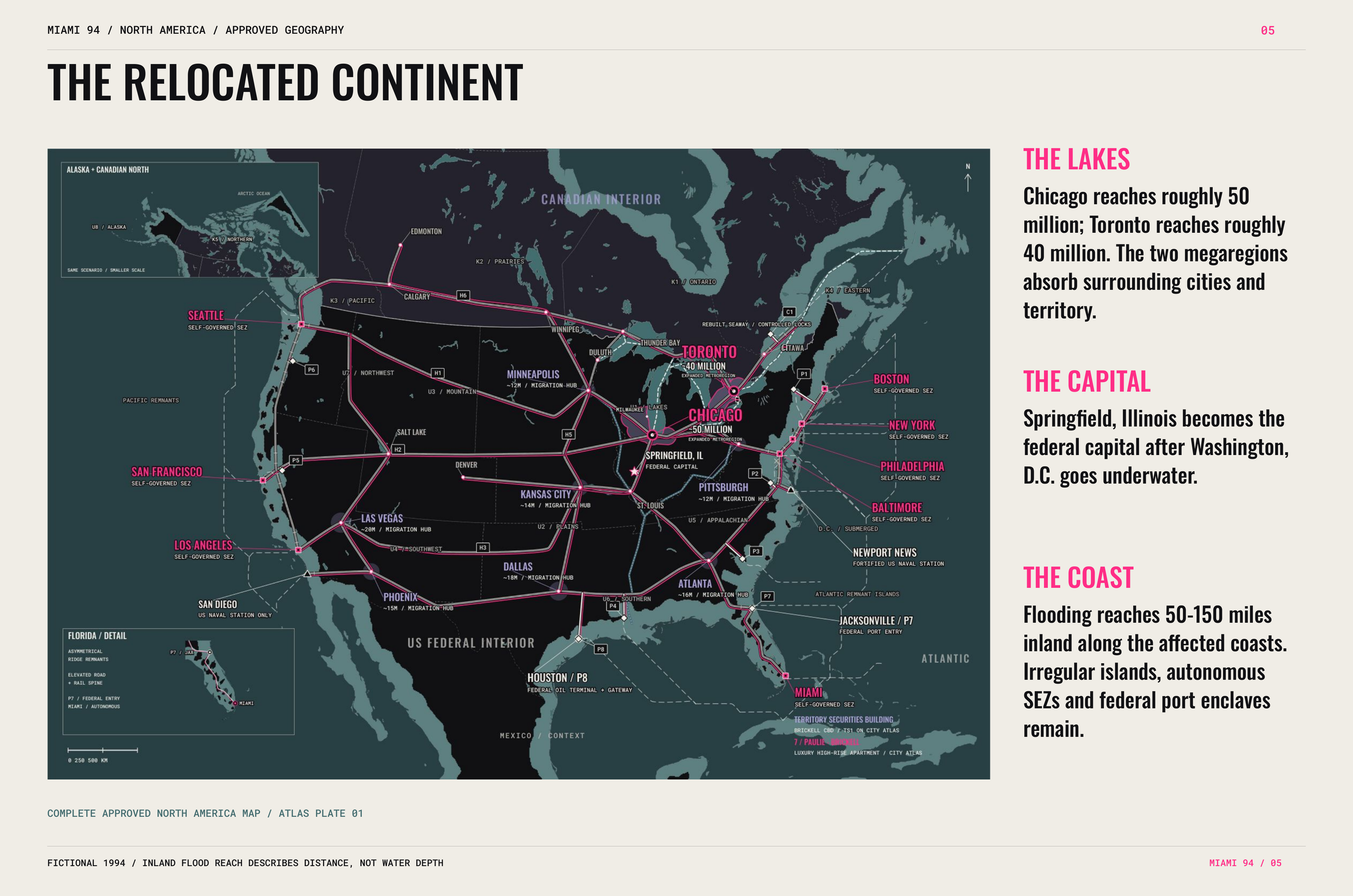
Miami 94 takes place in an alternate 1994, after catastrophic flooding has transformed coastlines and displaced populations. The Cold War has expanded into a competition for survival: governments relocate people and industry inland while defending the ports and infrastructure their economies still depend on.
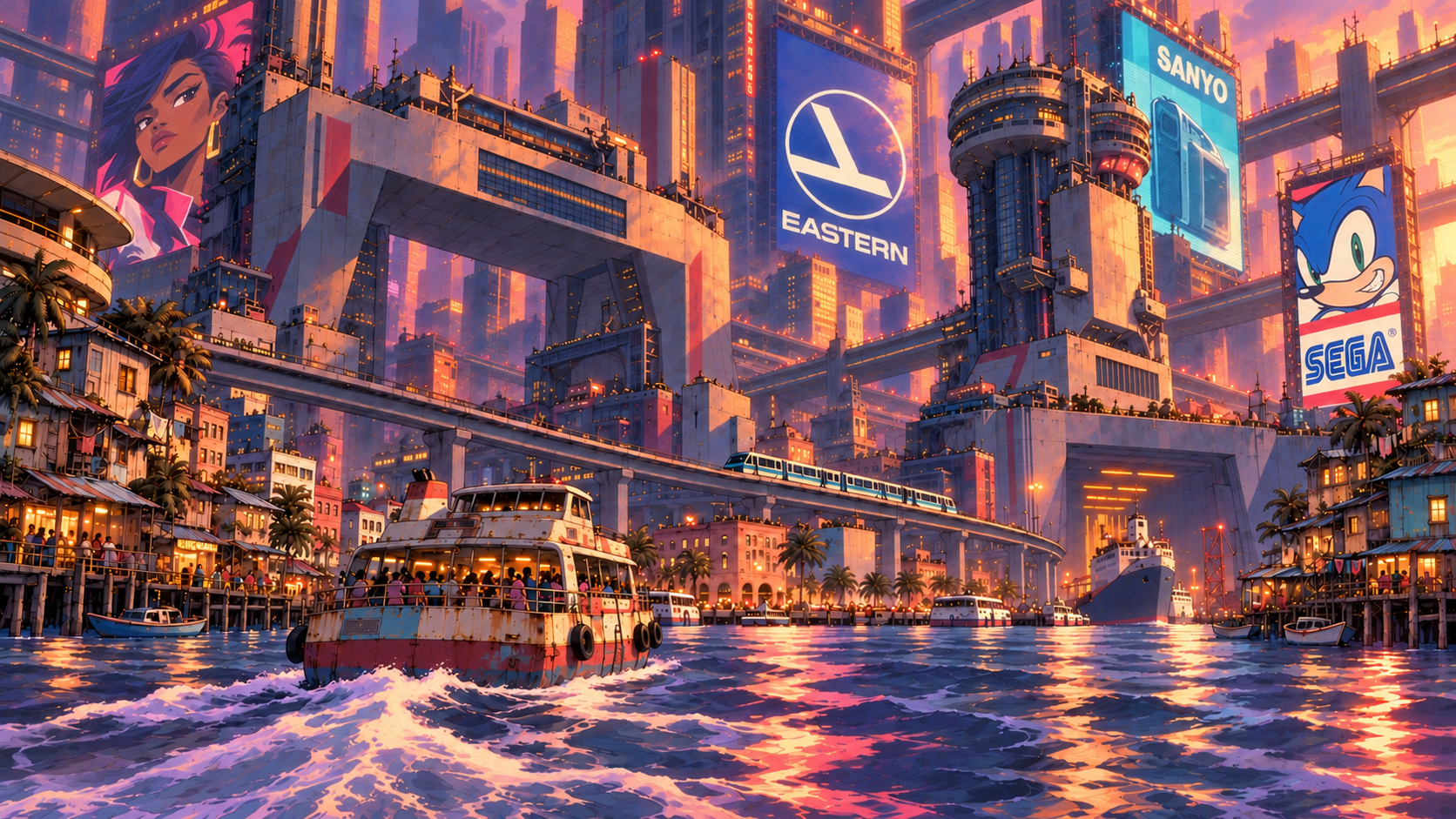
Florida has become a network of islands, settlements, and elevated connections. Highways and rail cross the flooded peninsula, linking surviving communities to the Federal Interior. Shipping routes carry goods between fortified gateways and coastal territories.
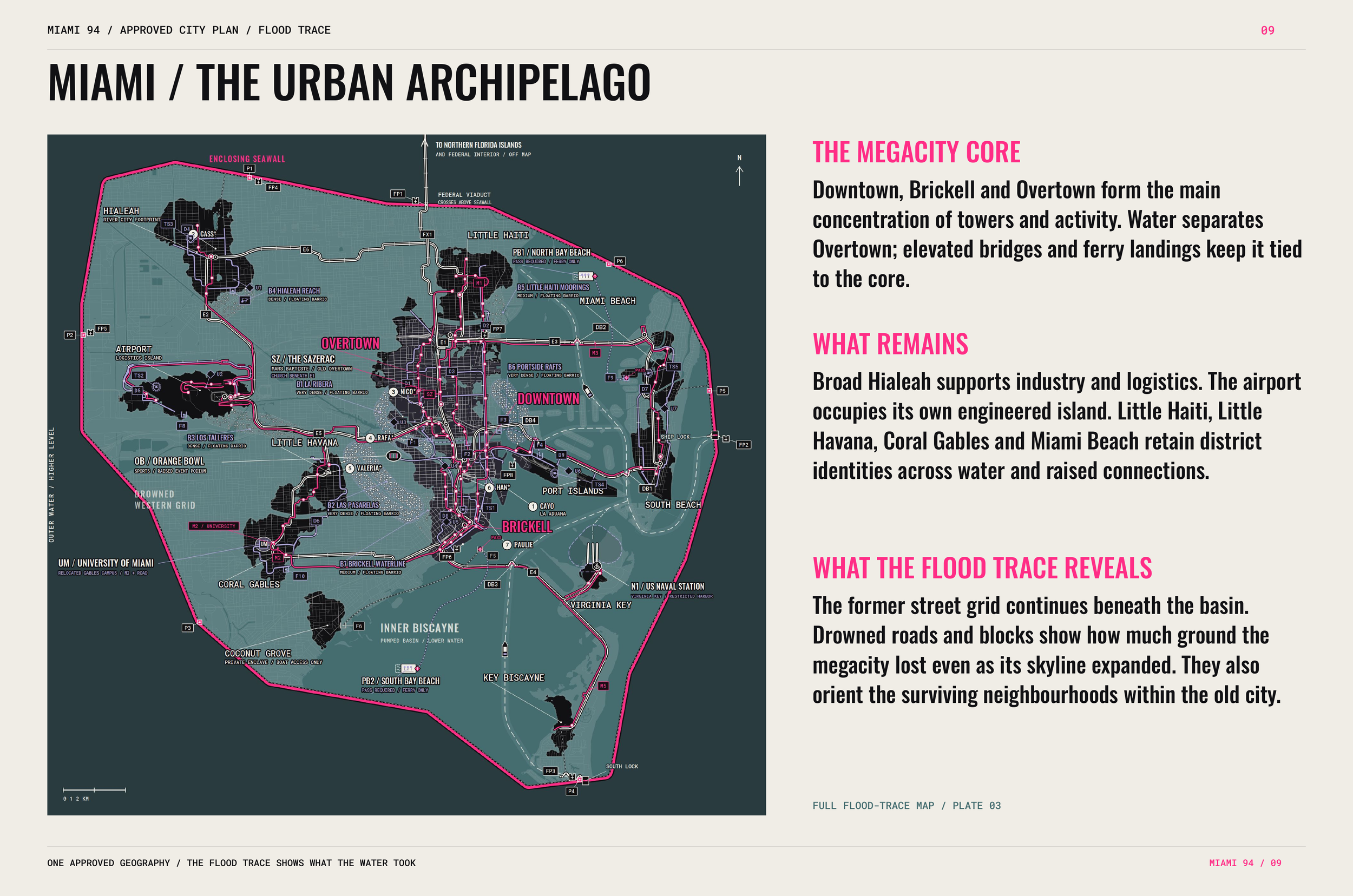
Within this altered geography, Miami survives as an autonomous Special Economic Zone and a vital trading port. Decades of construction have produced an immense urban archipelago enclosed by a continuous seawall. Its survival depends on power, maintenance, and machinery that cannot stop.
This history gives the world its central tension: protection sustains the city, while control over that protection becomes a source of power.
“Narrative is the first piece in a network of Maps, Logistics & World building that Anchors our Story & provides AI a schematic to build compelling & Aligned world building”
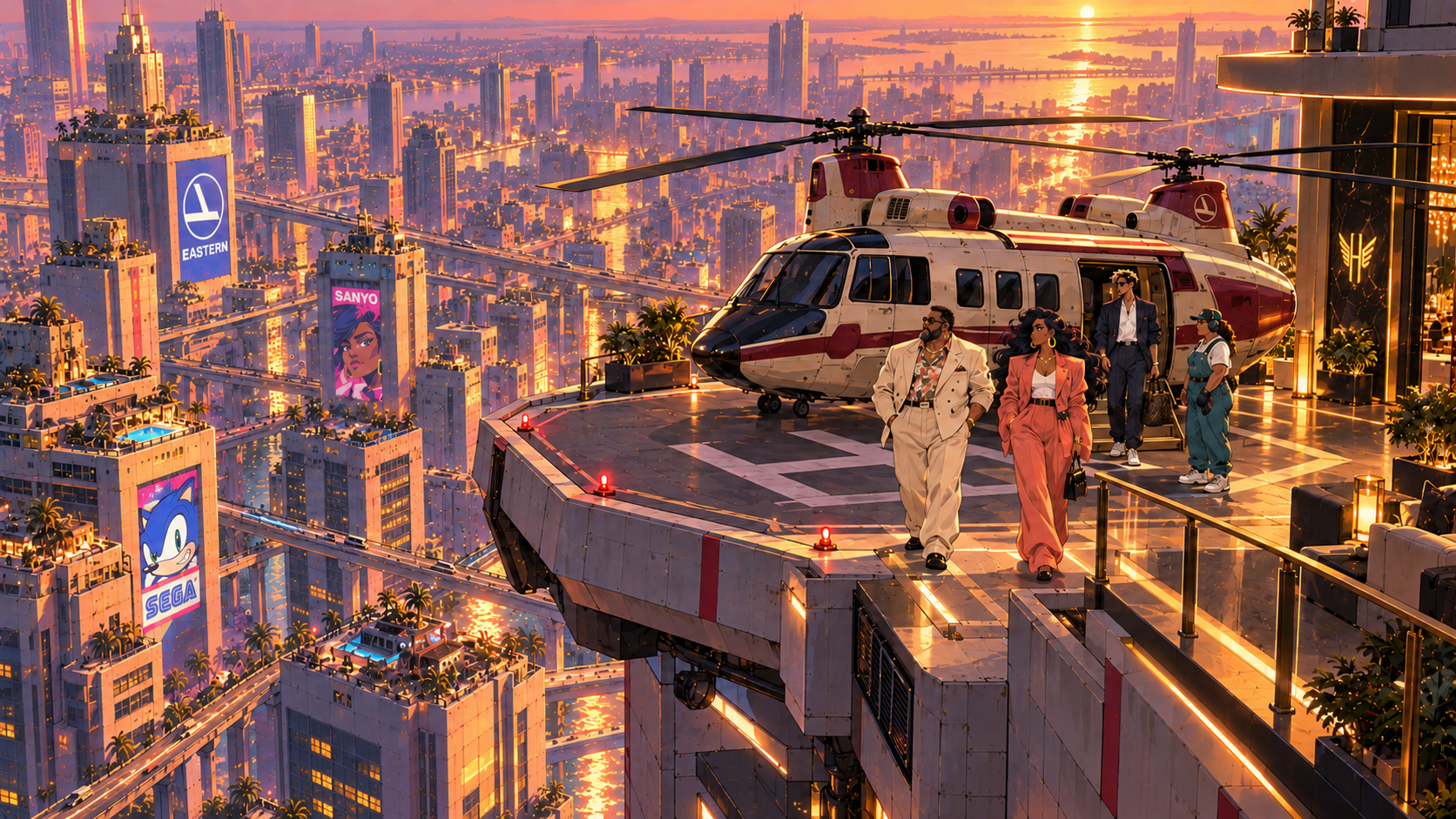
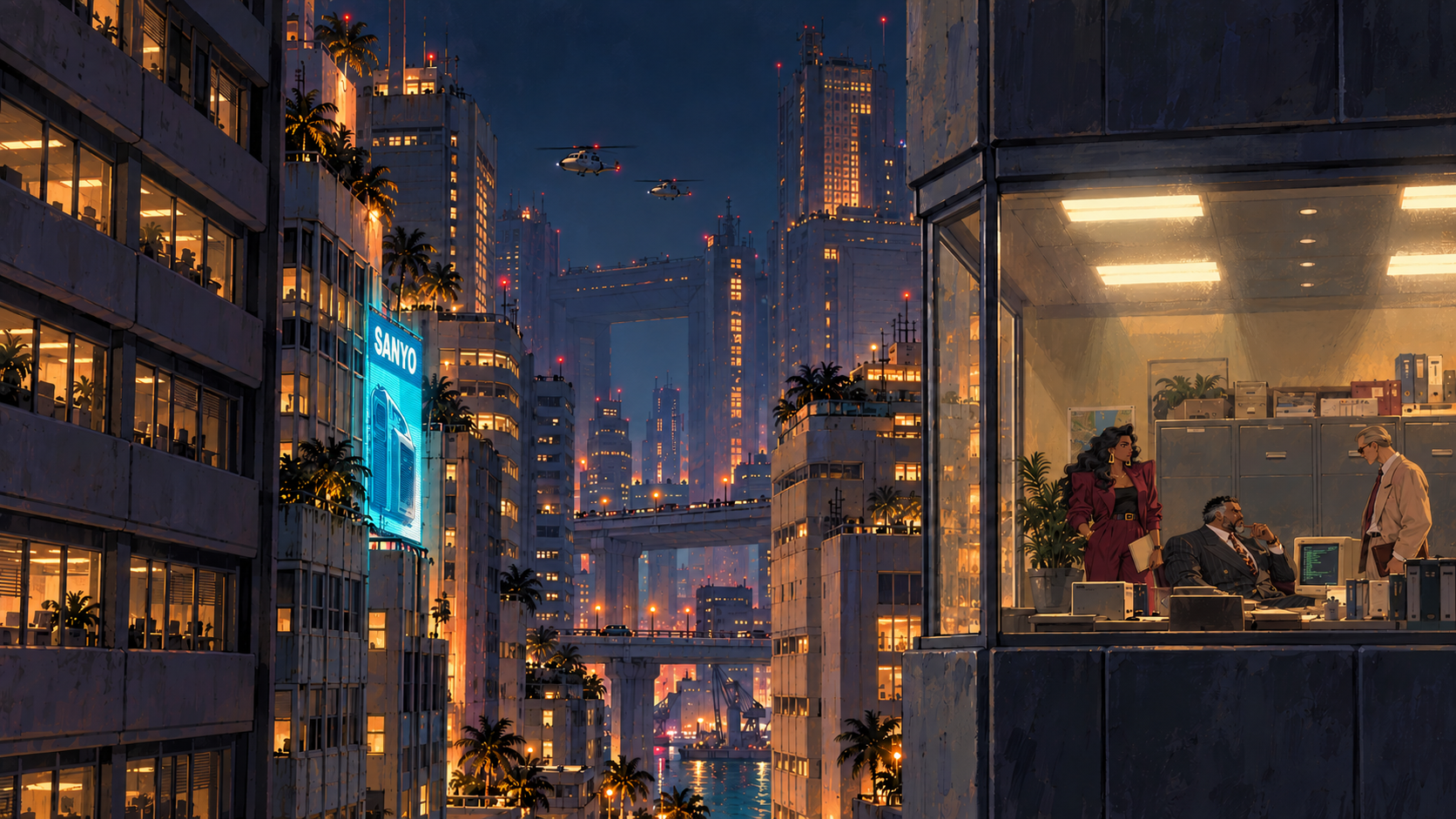
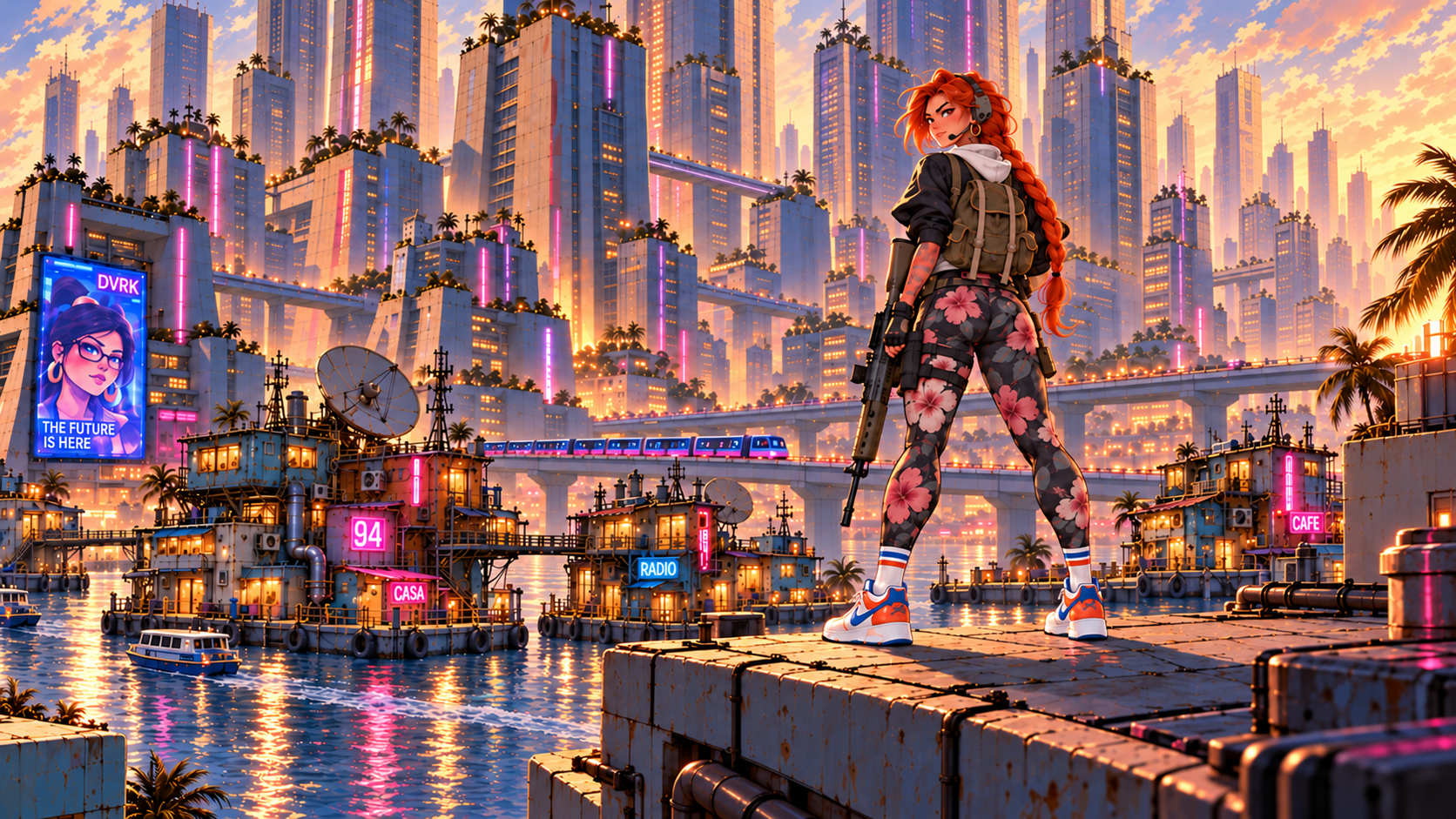
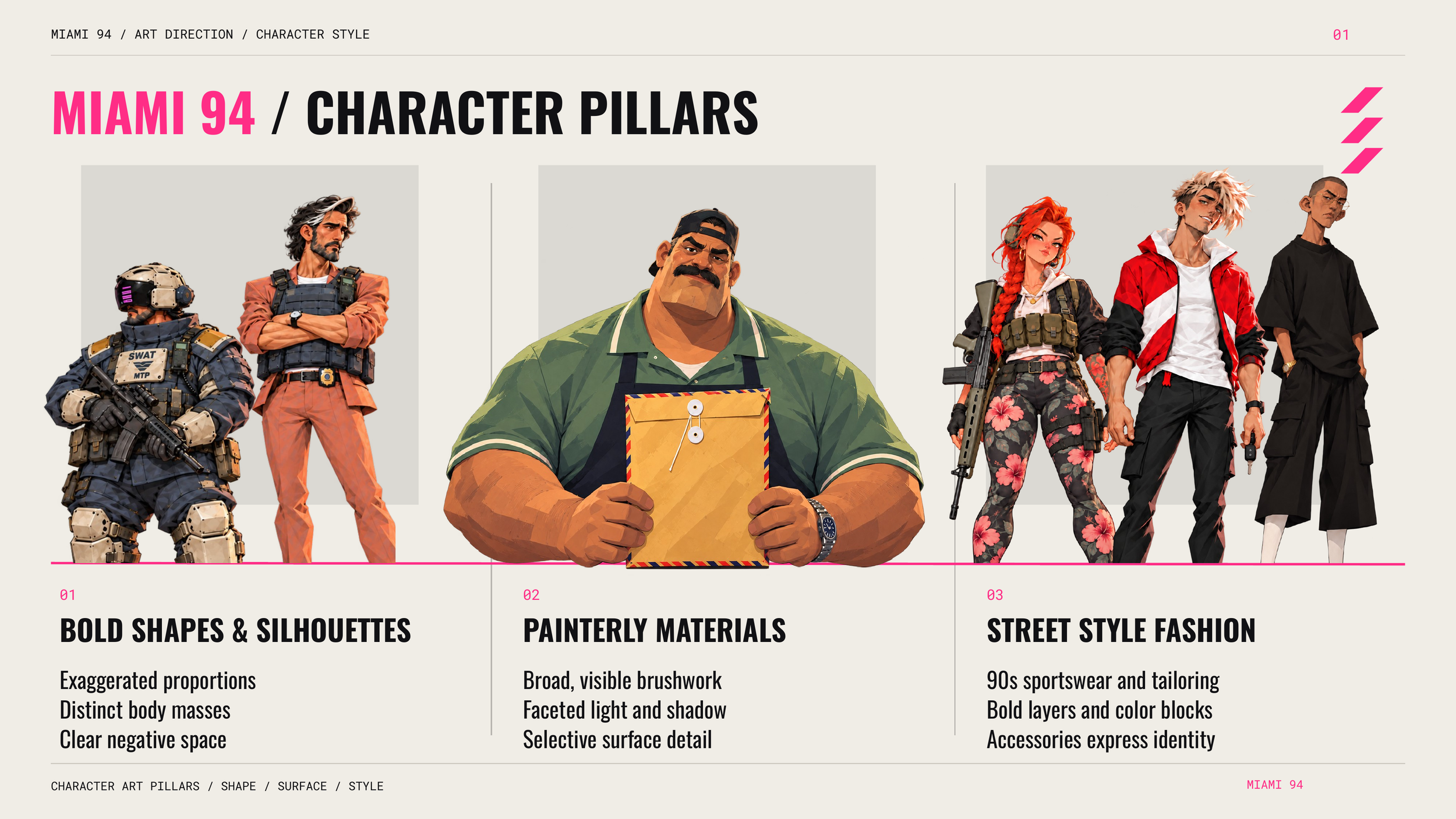
Distinct Characters. One World.
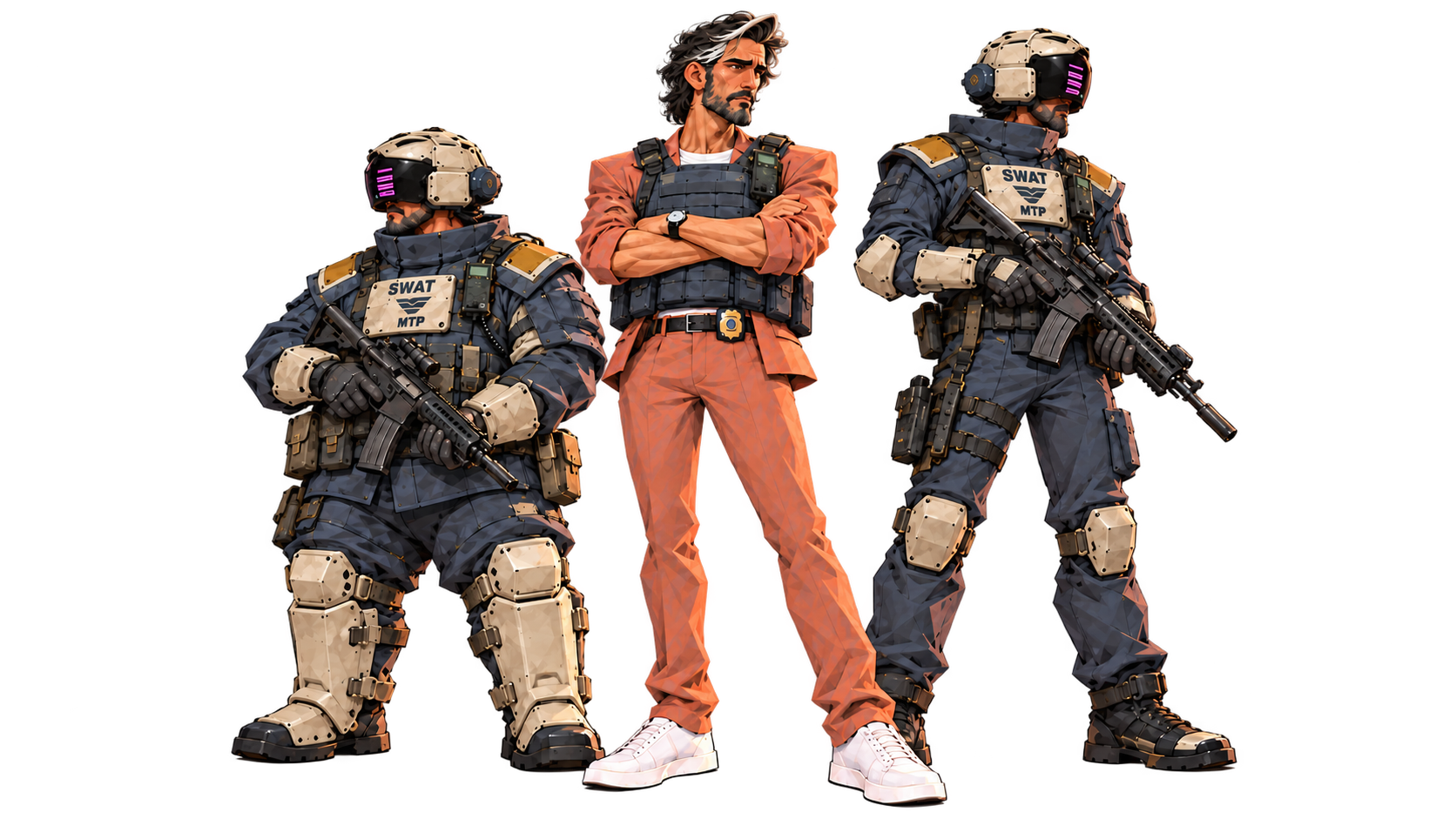
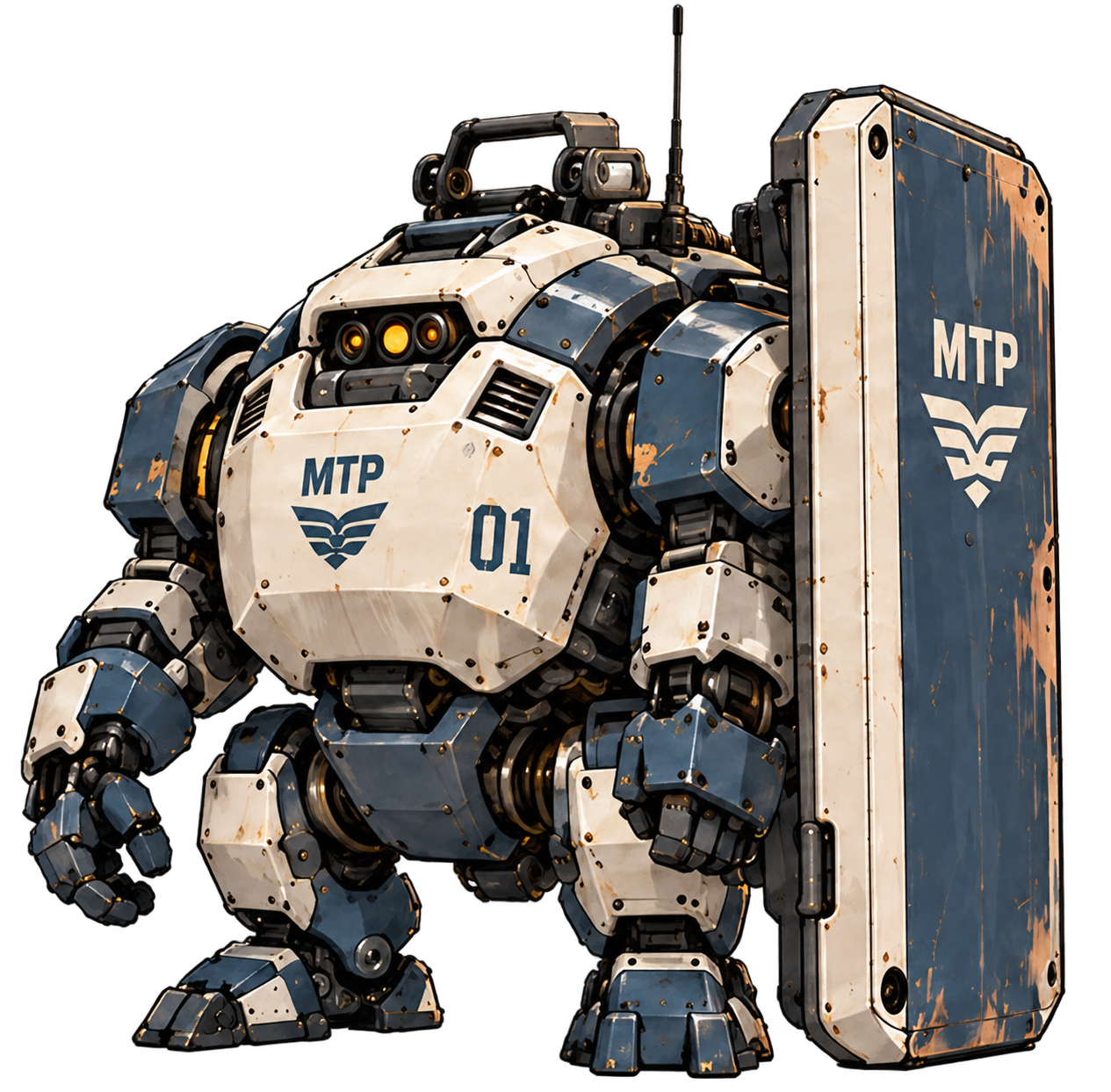
Miami 94’s character design rests on three pillars: bold silhouettes, painterly materials and street style fashion. Exaggerated proportions create immediate recognition. Broad brushwork gives surfaces a shared visual language. Clothing and accessories reveal personality, culture and each character’s place within the city.
I use AI to explore this direction through variations in shape, wardrobe and expression. Defined references, a shared style guide and deliberate refinement keep that exploration consistent while giving each character room to feel individual.
“Every character should stand apart and still belong. AI expands what I can explore; art direction makes it one world.”
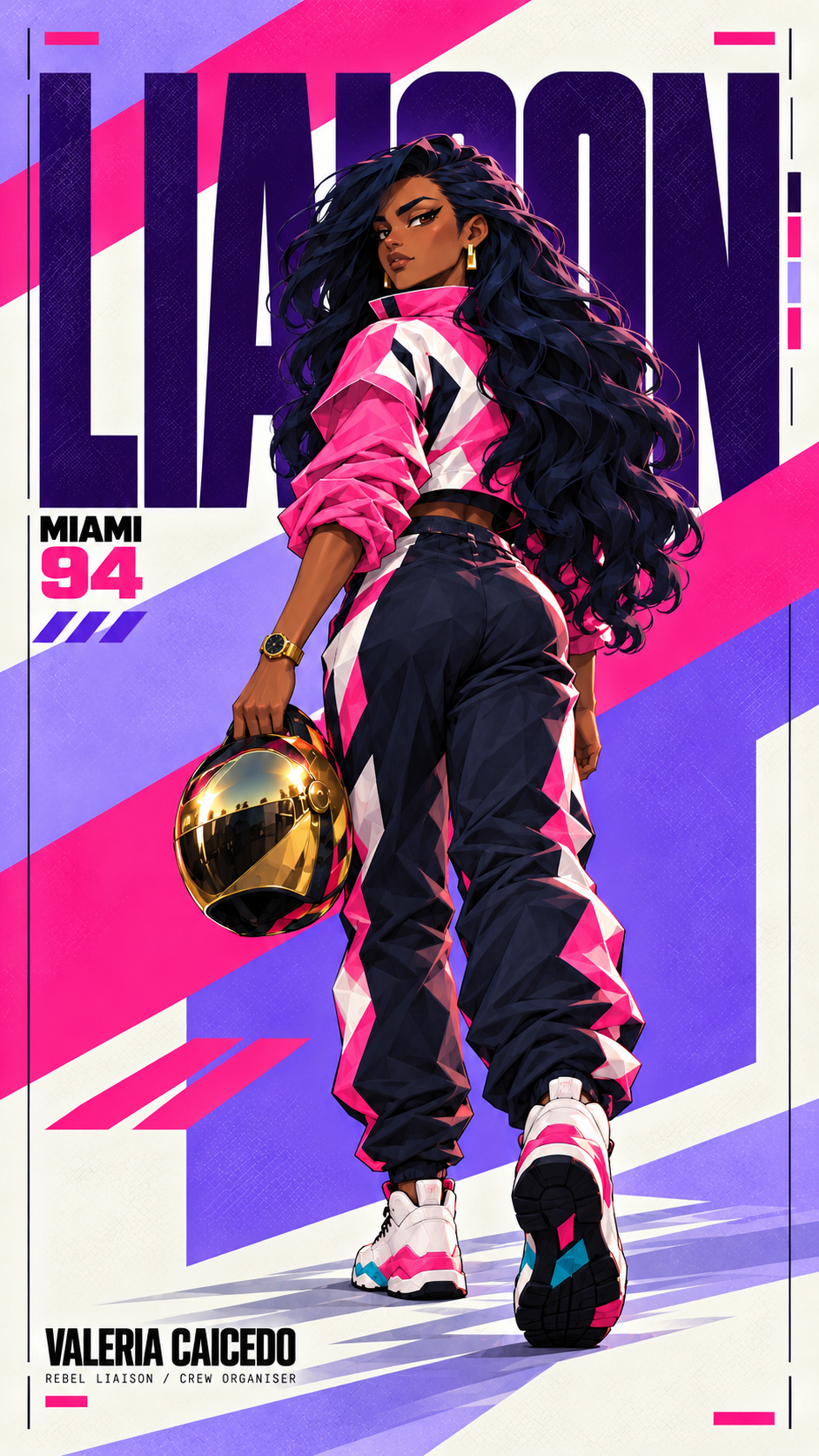

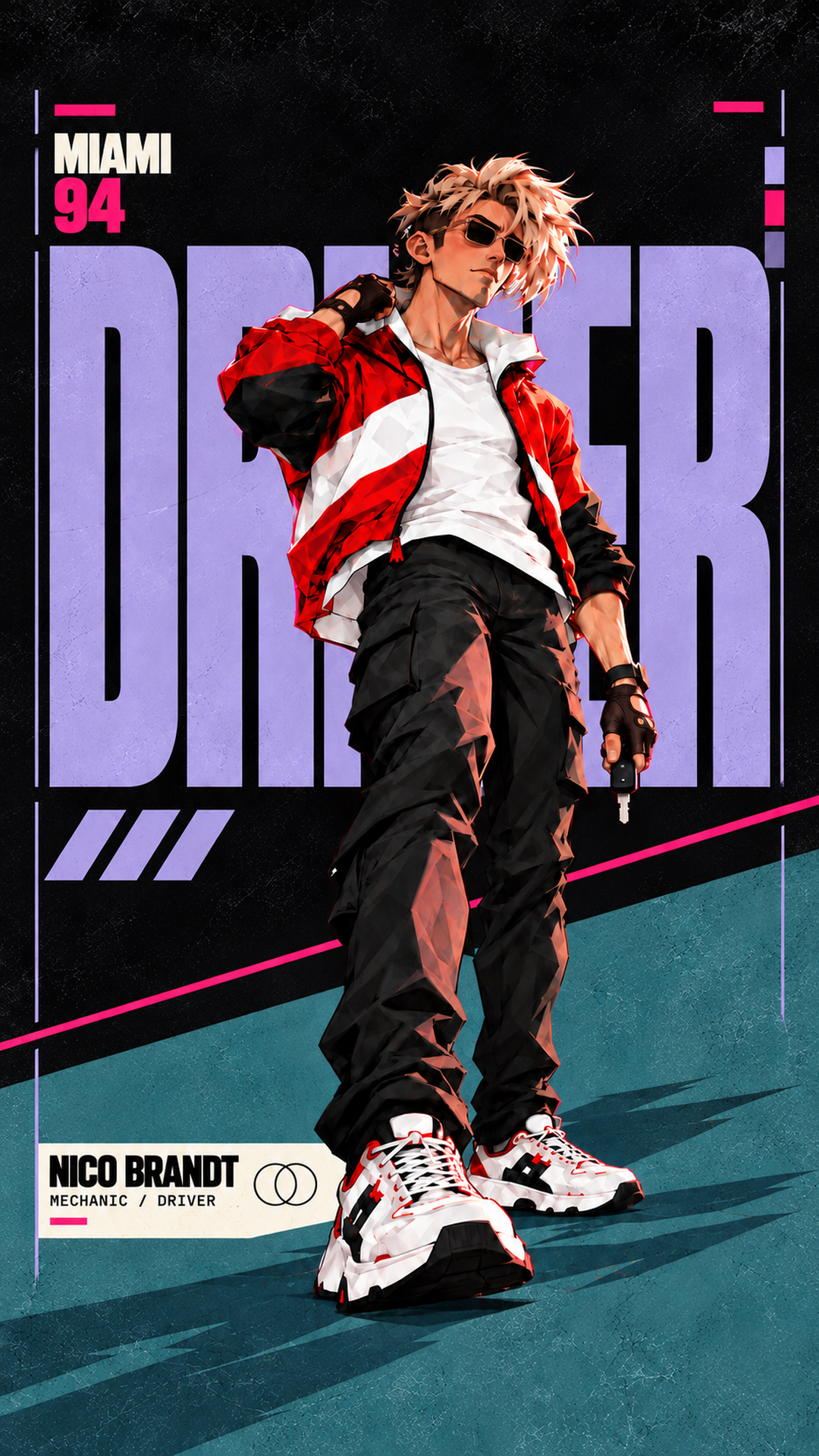
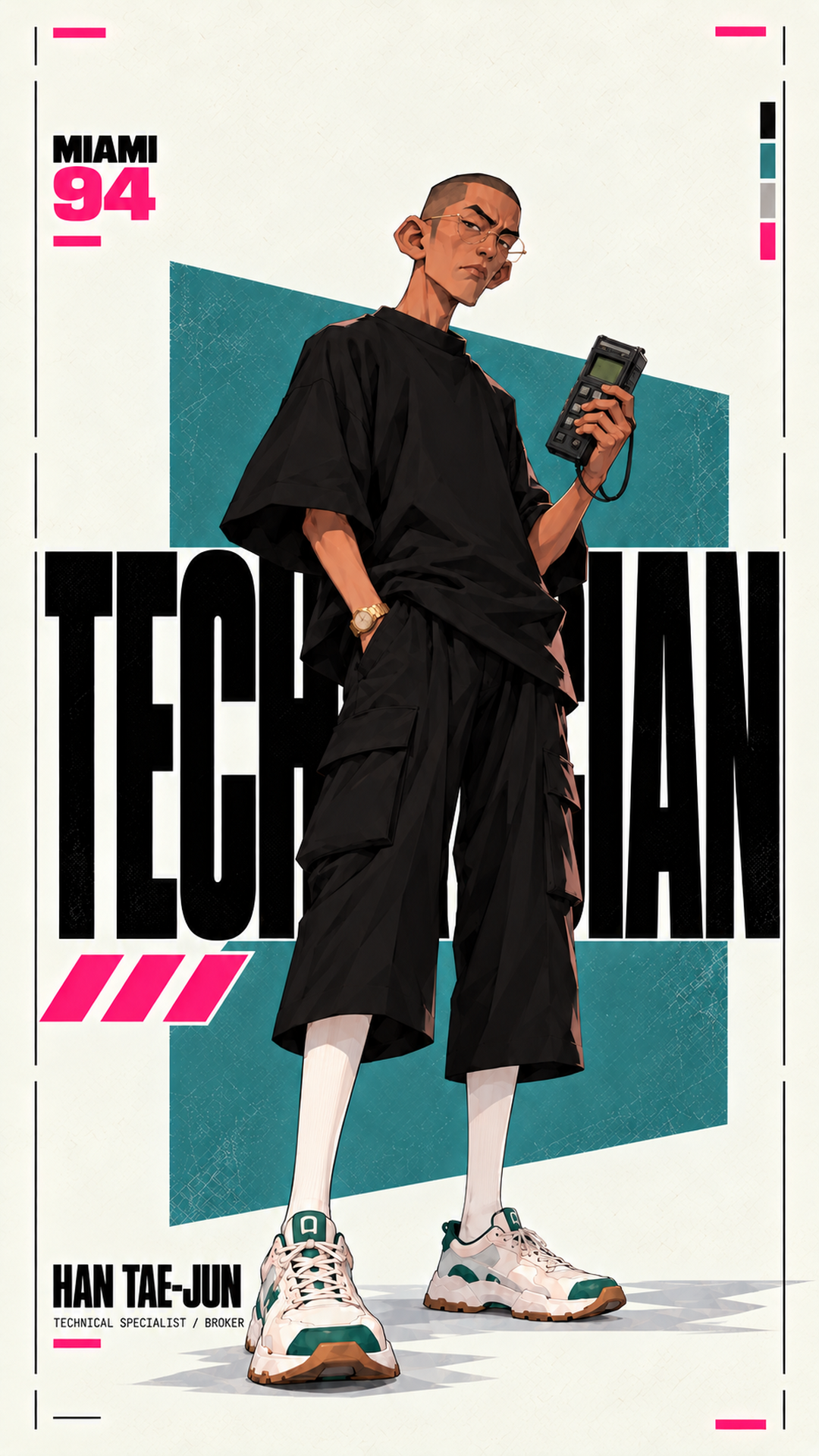
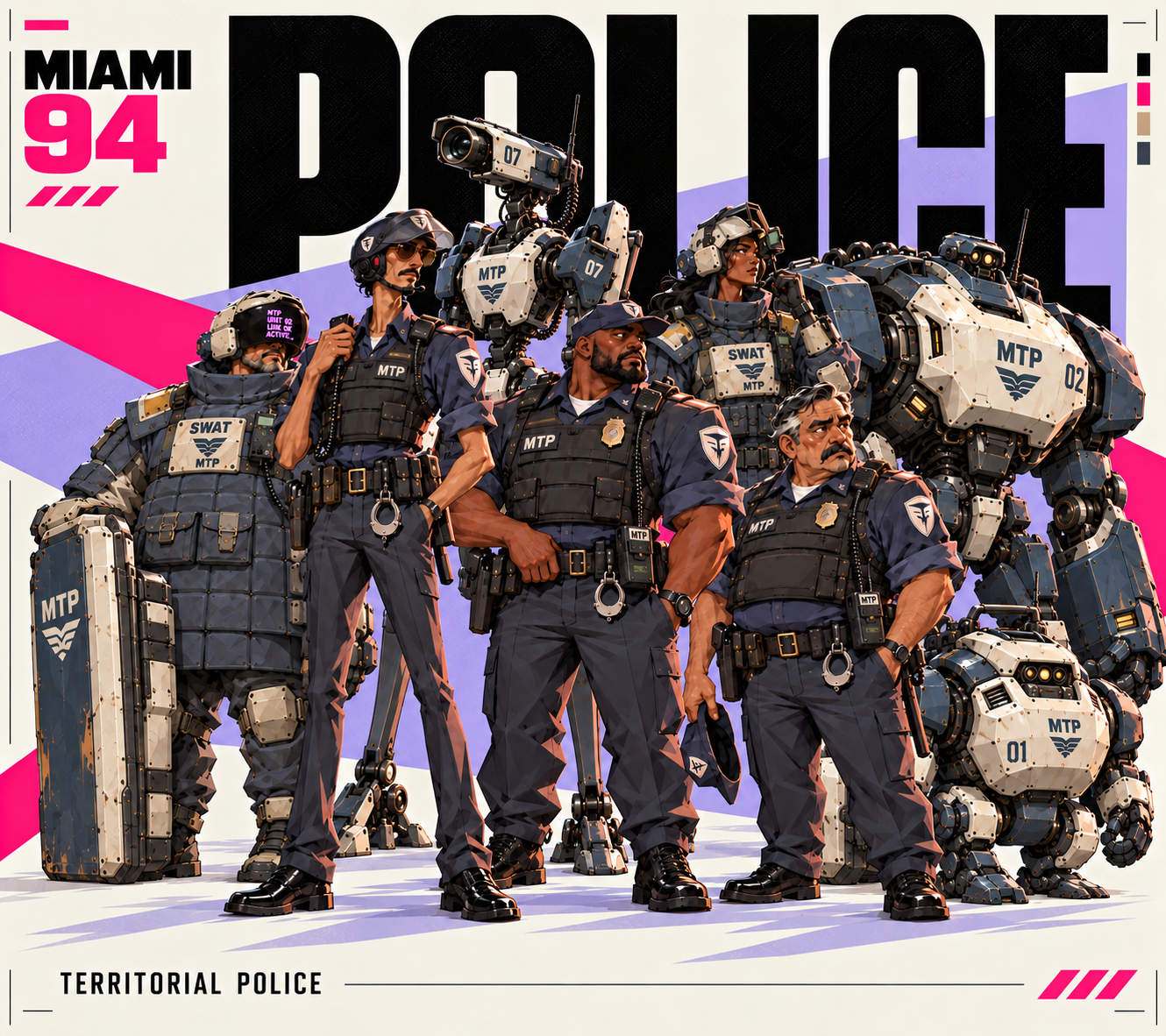

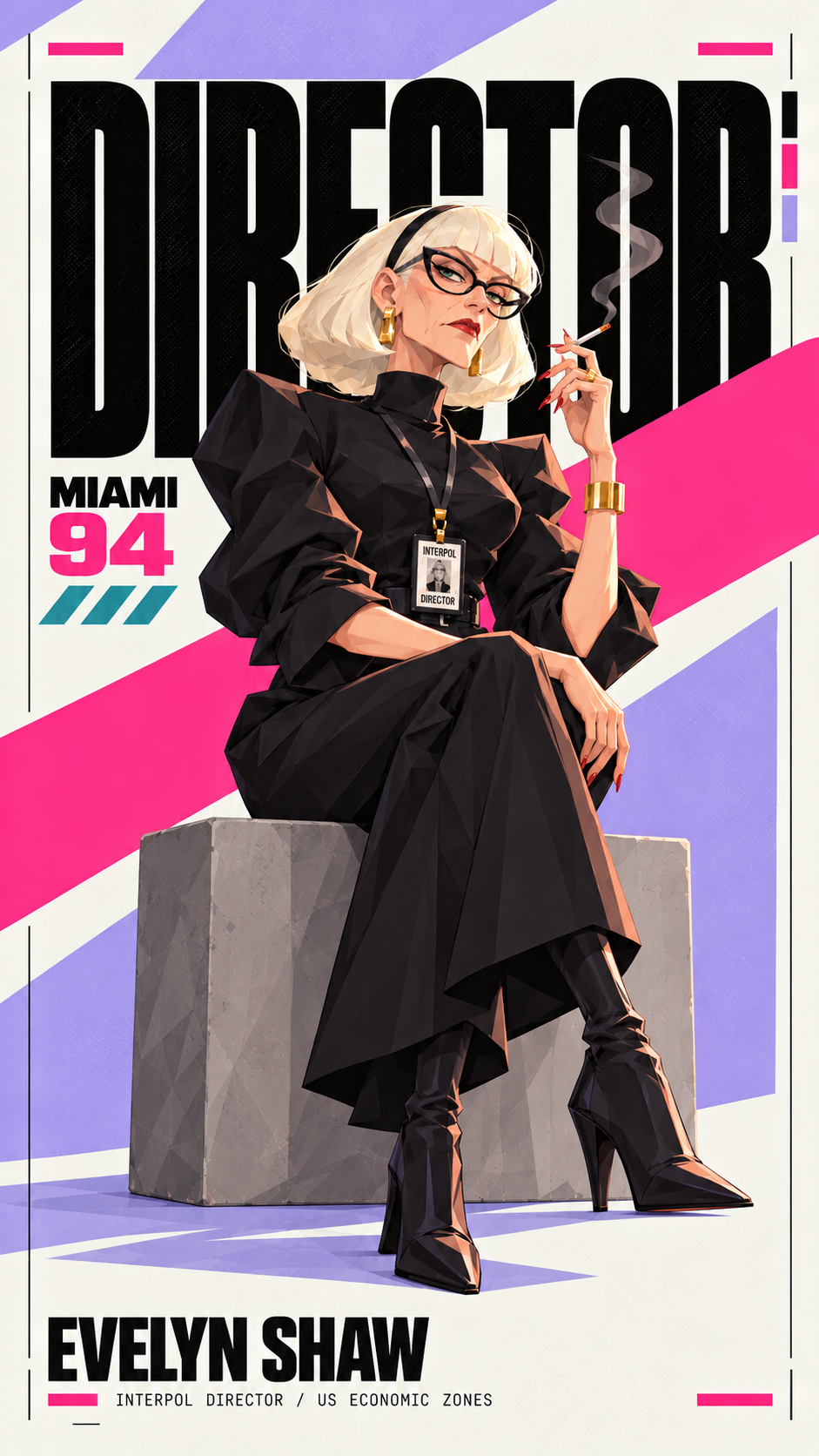
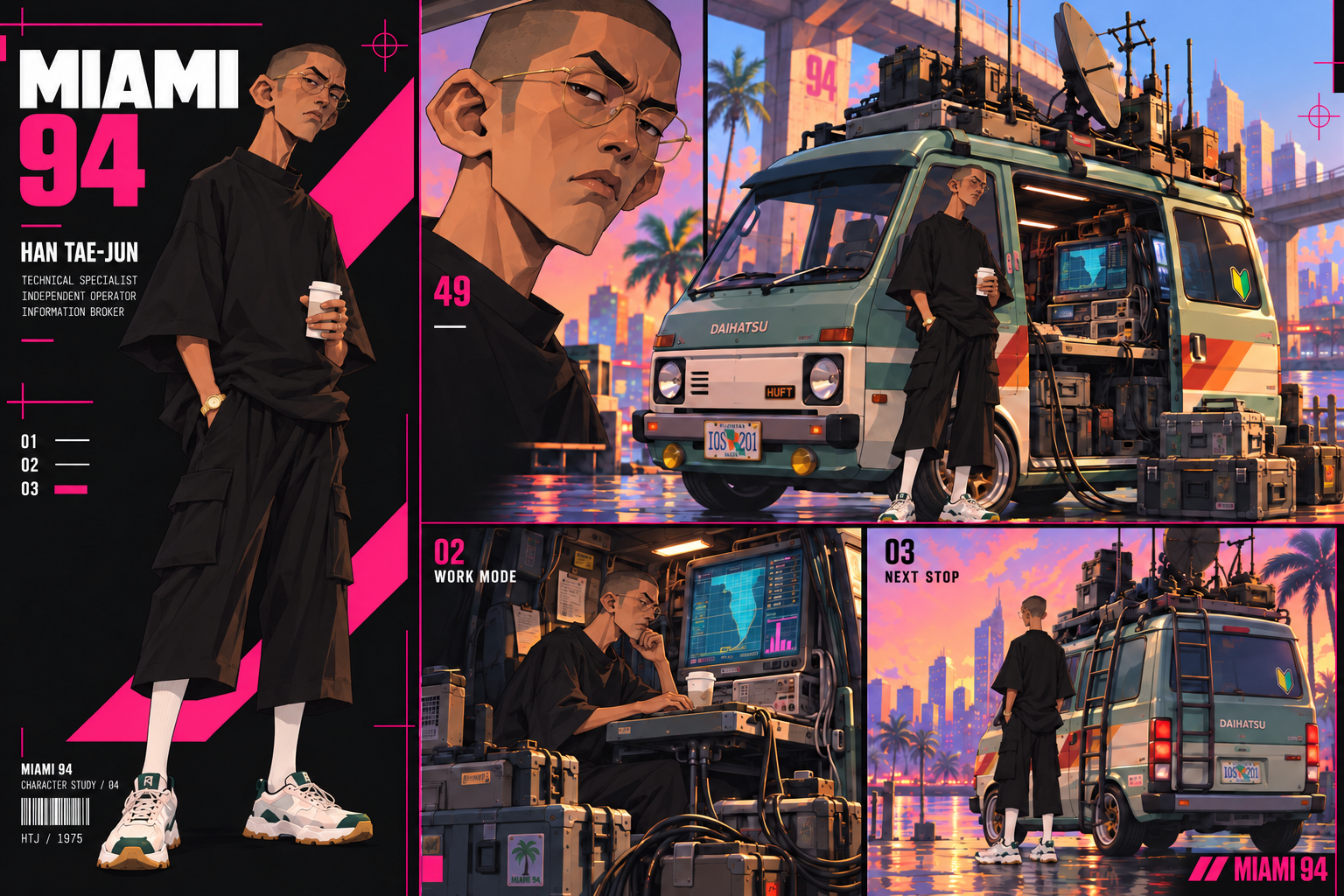
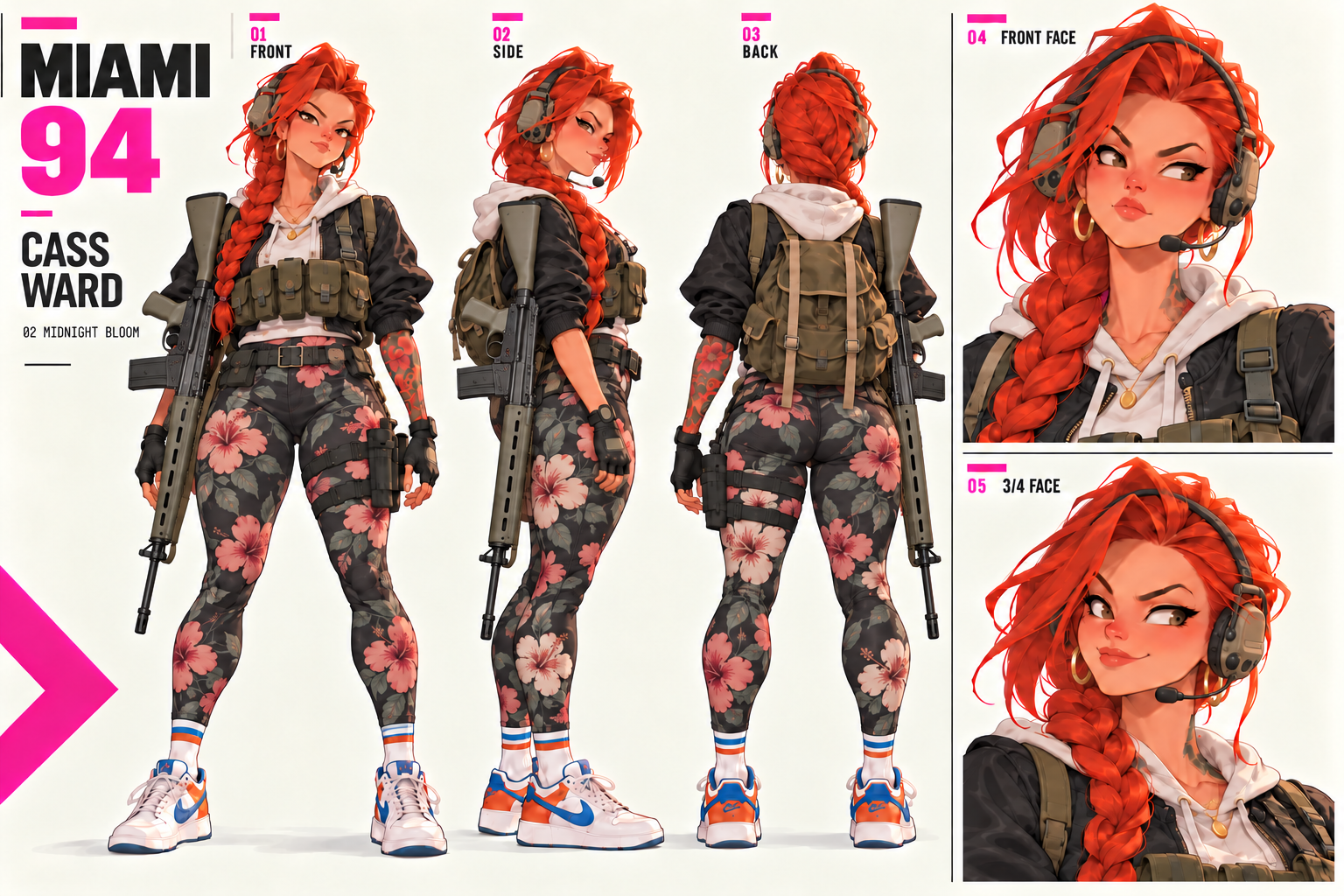
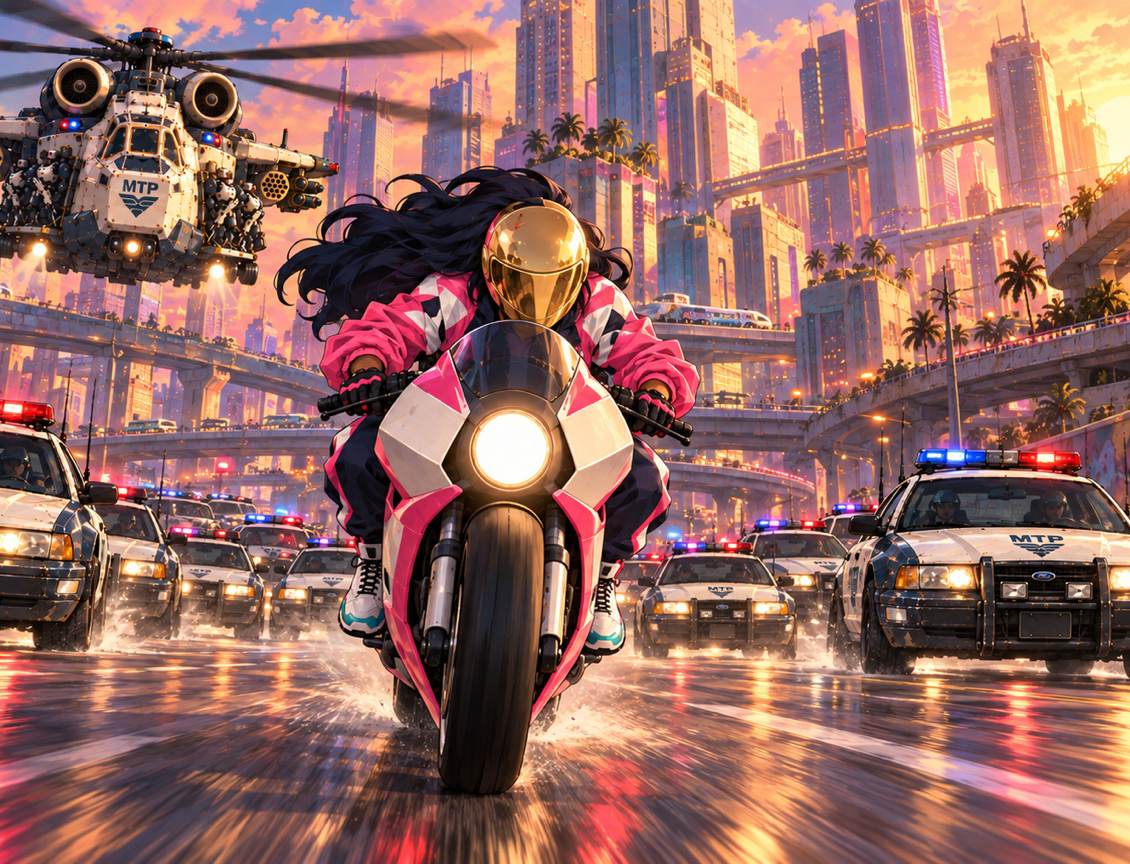
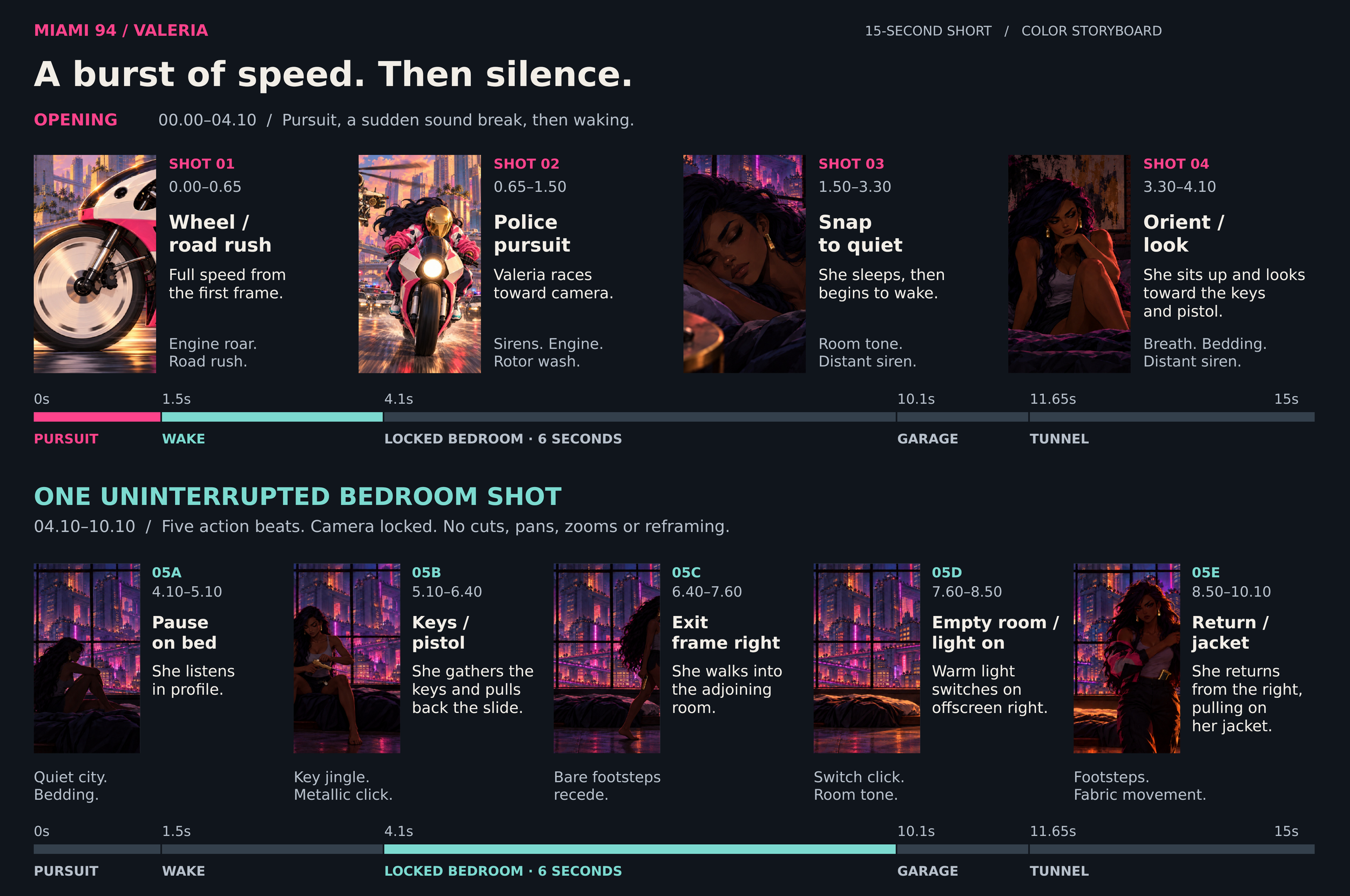
Narrative Character Development in motion
Storyboarding & Character Development help establish the characters Motivations, dispositions & how they fit into the world.
World Building illustrations, Character Sheets, Maps & written Narrative Create a synergy for strong Story Telling & Rapid Prototyping within the worlds connected fabric.
“Prompting & Creation directly Feeds back into your LORA. Volume is key for Training & Consistency.”
Art Direction First. A World Built with AI Execution.
Miami 94 is my exploration of how AI can help develop a world with a distinct identity. Its story, cultural influences, geography, and characters establish the foundation. Those decisions guide the architecture, vehicles, environments, and visual language—giving each new asset a place within a larger narrative.
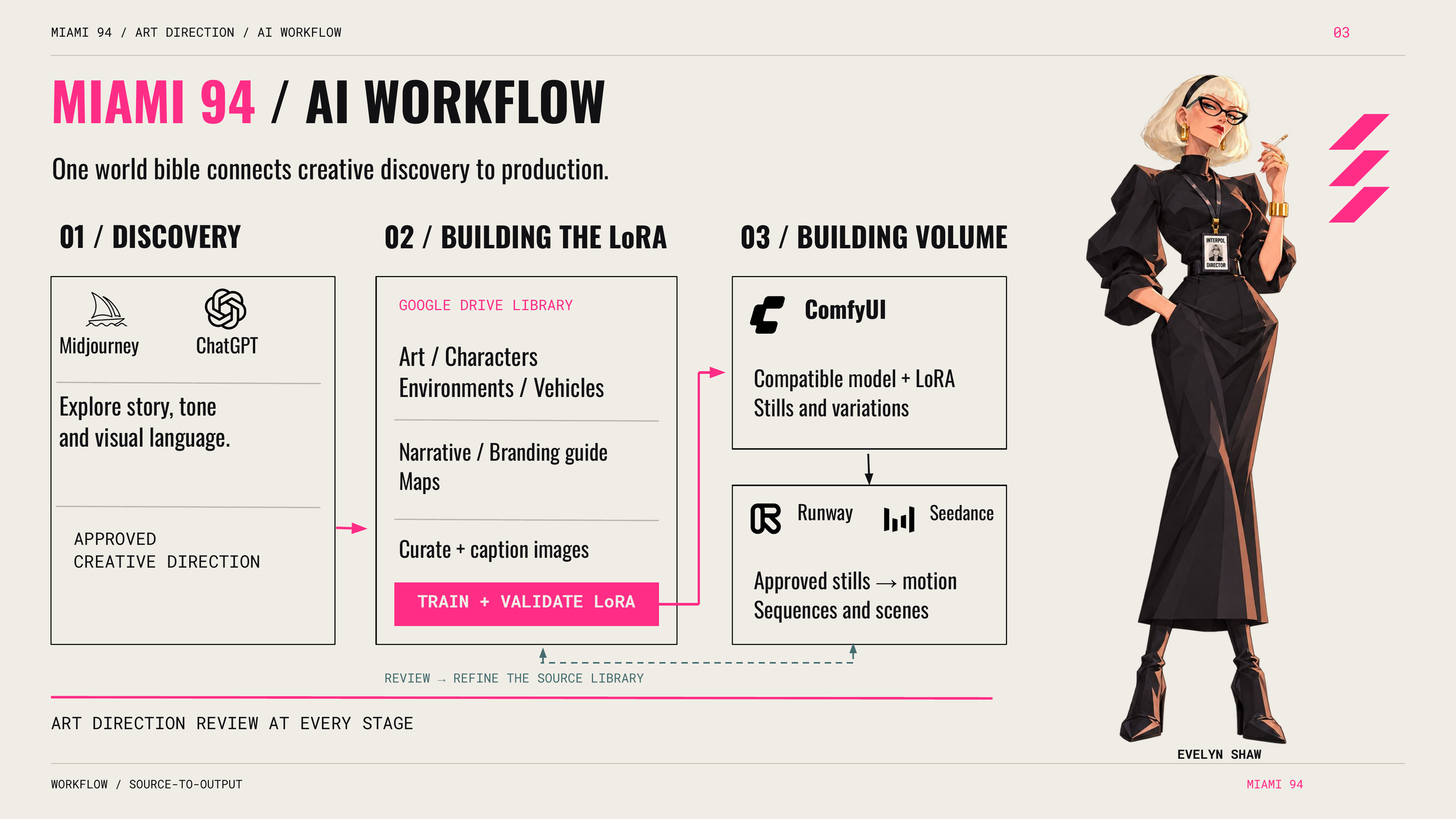
This proposed workflow connects discovery, consistency, and production. Midjourney and ChatGPT support early visual and narrative exploration. Curated artwork would form the foundation for LoRA training, while the narrative, branding guide, and maps inform selection and evaluation. ComfyUI would support further image development, with approved stills moving into Runway or Seedance to explore motion and cinematic storytelling.
Throughout the process, my role as Art Director remains central: defining the vision, selecting what strengthens it, and refining the details that make the world feel connected and believable.
“Every image should tell us something about the world. Art direction decides what that story is & how Visually aligned the output is. AI Workflow provides the Execution & Volume.”